OK, I take your point, and I guess I agree that there are no victimless sins. For one, if ransom or substitution atonement theory holds any water, Christ at least had to suffer for my sins, even when they are as benign as staying up late. And secondly, I guess if I am in a bad mood due to my lack of sleep, others must suffer as well. But perhaps I can use this opportunity to talk about gradation of sins.
Calvin argued that all sin is mortal in the sense that it rightly deserves death. Since God commands perfect obedience to the whole law, the slightest misdeed puts us in opposition, and requires the atonement of Christ in order to be overcome. This is the teaching that we hear so often in the Mormon Church, and what, I think, influences Dr. B.'s discomfort in his previous post.
Most rational thinkers, however, realize that some sins are more destructive than others. In the Dante's The Divine Comedy a variety of sinners representing a gradation of sins and punishments are presented as Dante and the spirit of his guide, the classic poet Virgil, travel through the nine circles of Hell. The progression of sins revealed in the Inferno range from the least to the greatest. The lesser sins, which are really sins of omission rather than commission, belong to those spirits who inhabit Limbo, the first circle of Hell. The levels descend with the seriousness of the sin. Self -indulgent sins come next, followed by malicious sins.
The Roman Catholic church divides sin into the categories "venial" (lesser sins that do not concern a grave matter or are committed without full understanding), and "mortal" (which, unless confessed and absolved condemn a person's soul to Hell after death). Protestantism rejects the distinction between mortal and venial sin but affirms the gradation of sin. Levels of sin are also acknowledged in the Judaic tradition and in Islam. The very fact that we believe in degrees of glory in the afterlife should be an indication that Latter-day saint theology also involves the gradation of sin.
But we don't talk very much about this in the Mormon Church. In fact, many of our youth (and even adults) get the idea that a sin is a sin; and that is why you get some who, following a sip of coffee or an alcoholic beverage, think they are going to hell anyway, so why bother trying to keep any of the other commandments.
According to Rabbeinu Yona in the Jewish tradition, it is important to distinguish between gradations of sin for a number of reasons. First, this is necessary in order that the requisite repentance be commensurate with the misdeed. In Mormon terms, since we must confess the sin of adultery to a bishop, need we do the same when we gossip or get a speeding ticket? Second, determining relative importance of different sins is required so that the sense of guilt and shame be of the proper dimensions. How much pain and anguish need we suffer over staying up late at night when there are other, more important issues which might better merit our attention?
Showing posts with label she said. Show all posts
Showing posts with label she said. Show all posts
Saturday, October 10, 2009

Wednesday, September 2, 2009
Monday, August 3, 2009
She Said: How to Stay 29 Forever
Most of you must know by now that I am close to having that BIG birthday. And you also know that I'm really fighting it. An upcoming event that exacerbates the problem is that my first grandchild will be born in that same month. It's not that I don't want a new baby in the family, it's just that--I don't have any desire to be a grandma. I'm not moving gracefully into that stage of life.
That there is a term for "mid-life crisis" shows that I am not alone in this. Like many my age, I'm doing everything I can to stave off old age. I have changed my diet, I exercise faithfully 5 times a week, I moisturize! Dylan Thomas' villanelle has become more and more meaningful to me:
 In Jungian psychology the puer aeternus, or the Peter Pan figure, is an archetype, or a "primordial, structural element of the human psyche".
Luckily, like all archetypes the puer (or puella, for women) has both a positive and an negative aspect. The positive side of the puer is the Divine Child who symbolizes newness, potential for growth, hope for the future. He is open to new beginnings, is imaginative, inspirational, and a dreamer in the positive sense. He also foreshadows the hero that he sometimes becomes. The negative side is the child/adult who refuses to grow up and meet the challenges of life face on. On this side, certain life patterns keep on being repeated again and again without the achievement of any real inner or outer change.
I feel a certain empathy for those who relate to the Peter Pan myth. Michael Jackson is often cited as the most well-known recent example of this phenomenon:
I am Peter Pan in my heart, too.
I assume that Dr. B., in responding to this post, will tell me to grow up. In overcoming the Peter Pan mentality, Rahima Spottiswood mentions "the themes of abandonment and danger" that one must face, "the trials and ordeals suffered by all child gods and youthful heroes of myth and legend which reflect back to us the human condition of which we are all a part." It is true, I am afraid of abandonment. I am fearful of going forward, of aging, of losing the magic and the faith and the simplicity of childhood.
Some psychologists have said that archetypes cannot be chosen or abandoned. It is not necessary that the archetype be overcome. It needs to be recognized as the gift it is and worked with. Once the psyche understands what kind of archetype it is carrying, the individual can find ways to work with it in order to release its projections and take back the energy. In this way, the archetype can become an ally to the individual.
This sounds intriguing to me. I wonder if this technique is simply an avoidance of real life, a very "Peter-pannish" response, or if it actually holds promise for helping me integrate that foolish soul inside and the maturing container that houses it. Is growing up essential to finding happiness?
That there is a term for "mid-life crisis" shows that I am not alone in this. Like many my age, I'm doing everything I can to stave off old age. I have changed my diet, I exercise faithfully 5 times a week, I moisturize! Dylan Thomas' villanelle has become more and more meaningful to me:
Do not go gentle into that good night,
Old age should burn and rave at close of day;
Rage, rage against the dying of the light.
Though wise men at their end know dark is right,
Because their words had forked no lightning they
Do not go gentle into that good night.
Good men, the last wave by, crying how bright
Their frail deeds might have danced in a green bay,
Rage, rage against the dying of the light.
Wild men who caught and sang the sun in flight,
And learn, too late, they grieved it on its way,
Do not go gentle into that good night.
Grave men, near death, who see with blinding sight
Blind eyes could blaze like meteors and be gay,
Rage, rage against the dying of the light.
And you, my father, there on the sad height,
Curse, bless me now with your fierce tears, I pray.
Do not go gentle into that good night.
Rage, rage against the dying of the light.
In Jungian psychology the puer aeternus, or the Peter Pan figure, is an archetype, or a "primordial, structural element of the human psyche".Luckily, like all archetypes the puer (or puella, for women) has both a positive and an negative aspect. The positive side of the puer is the Divine Child who symbolizes newness, potential for growth, hope for the future. He is open to new beginnings, is imaginative, inspirational, and a dreamer in the positive sense. He also foreshadows the hero that he sometimes becomes. The negative side is the child/adult who refuses to grow up and meet the challenges of life face on. On this side, certain life patterns keep on being repeated again and again without the achievement of any real inner or outer change.
I feel a certain empathy for those who relate to the Peter Pan myth. Michael Jackson is often cited as the most well-known recent example of this phenomenon:
In a 2003 interview, Jackson told interviewer Martin Bashir, "I am Peter Pan". Bashir said, "No, you're Michael Jackson". Jackson then stated, "I'm Peter Pan in my heart".
I am Peter Pan in my heart, too.
I assume that Dr. B., in responding to this post, will tell me to grow up. In overcoming the Peter Pan mentality, Rahima Spottiswood mentions "the themes of abandonment and danger" that one must face, "the trials and ordeals suffered by all child gods and youthful heroes of myth and legend which reflect back to us the human condition of which we are all a part." It is true, I am afraid of abandonment. I am fearful of going forward, of aging, of losing the magic and the faith and the simplicity of childhood.
Some psychologists have said that archetypes cannot be chosen or abandoned. It is not necessary that the archetype be overcome. It needs to be recognized as the gift it is and worked with. Once the psyche understands what kind of archetype it is carrying, the individual can find ways to work with it in order to release its projections and take back the energy. In this way, the archetype can become an ally to the individual.
This sounds intriguing to me. I wonder if this technique is simply an avoidance of real life, a very "Peter-pannish" response, or if it actually holds promise for helping me integrate that foolish soul inside and the maturing container that houses it. Is growing up essential to finding happiness?
Thursday, July 30, 2009
Living the United Order Today
Today I'm going to write about what's on my mind--the United Order; and specifically how it is being lived today by a group of people living out on the Utah/Arizona border. I wrote a post giving the background over at Mormon Matters. Here on this blog I'd like to discuss whether or not the Law of Consecration is a viable alternative in today's world.
As we Mormons know, there were several attempts at living the United Order (a vehicle established to manage the law of consecration) in the early days of Utah. Church rhetoric states that the United Order is no longer necessary. Consecration is understood to mean selfless dedication of time and means to help "build Zion" through spreading the gospel by means of missionary work, temple and family-history work. Faithful members are now asked to tithe and give other donations to support those endeavors, as well as to serve in the church's unpaid ministries.
In the conversation over at Mormon Matters, a lot of attention is being paid to whether polygamy is moral or legal. So I don't want to talk about that here. I want to discuss whether it is possible or advisable to live consecration in this day and age. Is it legally feasible? Do you think there would still be so many problems if the group attempting it were not involved in polygamy? Would it be possible to sustain the desire to live communally if the people were not doing it for religious reasons? Why did the LDS church move away from the United Order as a way of living consecration? Is this just too hard for modern capitalists to do?
Do you ever have a longing to live in a United Order, like I do?
(Here's a house that was built in a day, The FLDS community accomplishes this by donating their time and the materials--and working together for the common good.)
Tuesday, July 28, 2009
She Said: Is it True? Is it Kind? Does it Improve on the Silence?
When Dr. B. told me he was going to write on this topic (being honest) and the perspective he was going to take, I replied that I would take the position that "Some things that are true are not very useful!" This was a bit of a joke at the time, since I'm not the hugest fan of how Boyd K. Packer employed that statement.
HOWEVER.
Upon reading Dr. B.'s post I am beginning to believe, for the first time, that Elder Packer had a point!
OK, I admit it. I fudge the truth. One, I had to edit out that part in DH's post where he told my ACTUAL weight. That certainly wasn't very useful. And I'm not so sure the part about the wrinkles and bags under my eyes was useful either.
I think that we all want to make ourselves look good. We want to emphasize the parts of ourselves that are virtuous, lovely, and of good report, and we want to make sure that, if we are discussing our foibles, that our friends will understand our motivations and mitigating circumstances that led us there. In terms of a temple recommend, I'm not really sure that it is necessary to discuss and confess every little piece of unworthiness that exists in our soul. We are all unworthy to enter into a perfectly pure place. But the questions are there to establish basic boundaries, and to help us examine ourselves gently. Our leaders don't probe into exactly how we calculate our tithing, or how we define the Word of Wisdom--and I think there is a reason for that. What Dr. B. calls the "macro view" isn't necessary in passing a temple recommend interview. I learned that the Bishop doesn't want to hear that I told my husband I spent $20.00 at WalMart when I actually spent $50.00. This is something I need to deal with on my own, and is between myself, my husband, and the Lord.
The most eloquent (and attributable) quote on this subject is one from the controversial nineteenth-century guru Sai Baba: "Before you speak, ask yourself, is it kind, is it necessary, is it true, does it improve on the silence?" This is very similar to the story of Socrates' "Triple Filter."
Can these "truth tests" be applied to a temple recommend interview? How detailed are you when you answer the questions? How necessary is it to admit that you took a pen or some paper clips from work, or that you yelled at your children? How best shall we honor the truth in our lives while "improving on the silence?"
Thursday, July 23, 2009
She Said: Should Mormons in the Diaspora Celebrate Pioneer Day?
It has only been in recent years that I have slowly become aware that not every convert to the Church shares my deep identification with the Mormon pioneers. I have loved the epic story of the trek to the Salt Lake Valley. I appreciate its archetypal connotations. My heart thrills with the stories of the pioneer heroes and heroines, and I consider each of their stories part of my legacy as a Mormon, though my LDS heritage begins with myself.
In the last few years there has been some grumbling by members who don't have Mormon pioneers in their genealogy that it annoys them to celebrate the July 24th holiday, a commemoration of the day the first company of pioneers entered the Salt Lake Valley. I think partly to appease these voices, there has been an emphasis on "modern-day pioneers"--those who lead the way for others to follow and who blaze trails in other ways than traditionally recognized. There's a new Primary song, "I Can Be a Modern-Day Pioneer," there are more talks given by General Authorities on the subject, and there are articles such as the latest Mormon Times article "Pioneer Journeys of a Different Era."
There is a sudden dearth of Pioneer Day activities in wards outside of Utah, and in our ward last Sunday the only talk which mentioned pioneers emphasized modern-day contributions rather than those who crossed the plains.
I just want to register a caution to those who wish to move away from the traditional veneration of these honorable forebears. I want to remember their devotion to a faith that meant more to them than life itself. Social scientists often point to the Jewish culture and theorize that the reason it survived through so many years and the scattering of the people to so many different places was the very persecution which caused them to band together in small groups, and their longing remembrance of their homeland.
 By the rivers of Babylon, there we sat down,
yea, we wept, when we remembered Zion.
We hanged our harps upon the willows in the midst thereof.
For there they that carried us away captive required of us a song;
and they that wasted us required of us mirth, saying,
Sing us one of the songs of Zion.
How shall we sing the Lord’s song in a strange land?
If I forget thee, O Jerusalem, let my right hand forget her cunning.
If I do not remember thee, let my tongue cleave to the roof of my mouth;
if I prefer not Jerusalem above my chief joy.
Psalm 137)
This Psalm is a poignant lyrical device for recalling the story of Israel's exodus from Egypt and its arrival in the promised land. It acts as an earnest reminder both to the exiled Israelites and to later biblical readers of the importance of the promised land for the celebration of the Jewish faith.
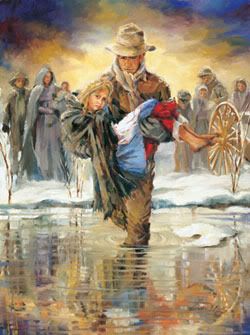 Now that we Latter-day Saints experience little real persecution, and the importance of our history and sacred places is beginning to wane, are we in danger of losing some valuable aspect of our culture? Are we losing our Psalms, our legends, our traditional customs and stories?
I'd like to hear what our readers think. Do you feel a connection to the Mormon pioneers? Or do you think the holiday is unnecessary, especially to LDS of other cultures living in many different countries of the world? Should we attempt to graft new converts in to the Utah Mormon pioneer heritage, or should we transfer our loyalties to "modern-day pioneers?"
In the last few years there has been some grumbling by members who don't have Mormon pioneers in their genealogy that it annoys them to celebrate the July 24th holiday, a commemoration of the day the first company of pioneers entered the Salt Lake Valley. I think partly to appease these voices, there has been an emphasis on "modern-day pioneers"--those who lead the way for others to follow and who blaze trails in other ways than traditionally recognized. There's a new Primary song, "I Can Be a Modern-Day Pioneer," there are more talks given by General Authorities on the subject, and there are articles such as the latest Mormon Times article "Pioneer Journeys of a Different Era."
There is a sudden dearth of Pioneer Day activities in wards outside of Utah, and in our ward last Sunday the only talk which mentioned pioneers emphasized modern-day contributions rather than those who crossed the plains.
I just want to register a caution to those who wish to move away from the traditional veneration of these honorable forebears. I want to remember their devotion to a faith that meant more to them than life itself. Social scientists often point to the Jewish culture and theorize that the reason it survived through so many years and the scattering of the people to so many different places was the very persecution which caused them to band together in small groups, and their longing remembrance of their homeland.
By the rivers of Babylon, there we sat down, yea, we wept, when we remembered Zion.
We hanged our harps upon the willows in the midst thereof.
For there they that carried us away captive required of us a song;
and they that wasted us required of us mirth, saying,
Sing us one of the songs of Zion.
How shall we sing the Lord’s song in a strange land?
If I forget thee, O Jerusalem, let my right hand forget her cunning.
If I do not remember thee, let my tongue cleave to the roof of my mouth;
if I prefer not Jerusalem above my chief joy.
Psalm 137)
This Psalm is a poignant lyrical device for recalling the story of Israel's exodus from Egypt and its arrival in the promised land. It acts as an earnest reminder both to the exiled Israelites and to later biblical readers of the importance of the promised land for the celebration of the Jewish faith.
Now that we Latter-day Saints experience little real persecution, and the importance of our history and sacred places is beginning to wane, are we in danger of losing some valuable aspect of our culture? Are we losing our Psalms, our legends, our traditional customs and stories? I'd like to hear what our readers think. Do you feel a connection to the Mormon pioneers? Or do you think the holiday is unnecessary, especially to LDS of other cultures living in many different countries of the world? Should we attempt to graft new converts in to the Utah Mormon pioneer heritage, or should we transfer our loyalties to "modern-day pioneers?"
Wednesday, July 15, 2009
She Said: Letting Missionaries in the Door
 Latter-day Saints have a strong missionary tradition that commenced from the very first days of the Church. We are known in many countries for our proselyting missionaries. For a long time I only knew of one other denomination that sent proselyting missionaries around, and that was the Jehovah's Witnesses. But in the past few years my door has been knocked upon by various Christian missionaries. When we lived in Vernal, there was even an evangelical group who went around specifically to convert Mormons away from their beliefs.
I have always enjoyed my discussions with these proselyting missionaries. Once I met with a set of Jehovah's Witnesses for several weeks. Through studying with them, I gained a greater understanding of the use of the Tetragrammaton in the Old Testament. I was privileged to be invited to their worship service, and I observed with interest their unique procedures in partaking of the Sacrament. Christian missionaries have provided wonderful examples for me in charity and being personally involved in projects to benefit the underprivileged. And Fundamentalist missionaries, while rare today, helped me appreciate our unique restoration heritage when they stayed with us for a few days in the early 1980's.
 Since our Church consists of so many converts, myself and Dr. B. among them, it is obvious that if these members hadn't been willing to entertain the missionaries--to let them in the door and listen to them, they would never had had the opportunity to hear the restored gospel and join the Church. But now that they are baptized members, should they shut their doors to missionaries of other faiths?
I am of the opinion that one should always hold an open mind when it comes to matters of religion. If we honestly seek the truth, we must be open to any conclusion. Our scriptures urge us to look for truth and knowledge wherever it may be found. I think that this includes in discussion with and examination of other faith traditions. People are generally afraid of uncertainty. They hesitate to challenge their secure world view, a view which is supported by the other members of their religion. But speaking with others with different paradigms and challenging our own assumptions is important. Religion is a search for truth, not a search for security, pleasure, friendship or approval.
That is why, when members of other religions knock on my door, I invite them in.
Tuesday, July 14, 2009
She Said: Victimless Sin #1
Hmm, Dr. B's last post sure sounded like a reprimand to me, did it sound like that to you?
He's right -- I do burn the candle at both ends. I used to be a "morning person," retiring at about 10pm and getting up around 6am. It all changed by the time my eighth child had arrived. I found myself so thrilled when they were all in bed that I finally had time to myself to read, do a project, or just have some free time alone, that I took to staying up quite late at night. This habit has continued over the years. I now go to sleep about 12 or 1:00 at night and wake up just before 7. During the school year I have to get up just before 6. This gives me 6 or 7 hours of sleep, which I think is rather reasonable. A few times a month I find myself involved in something to the point that I stay up until 2 or 3.
Every once in a while I will make an effort to get more sleep. But it's not that important to me. What about you? Do you think going to sleep and waking up early is an important commandment, or is it just a suggestion that might be helpful? I think if my body didn't need to sleep, I never would. Since I honor my mother and father and obey the Word of Wisdom, I am already assured of a long and healthy life. I enjoy my hours alone in the darkness, reading or thinking, perusing the blogs, writing poetry. I wouldn't trade them for a few paltry more years in my extreme old age.
BiV's Homage to the Dark Hours
My muses prowl in the dark hours--
They do not waylay the weary,
But bestow their boon on the bright-eyed
And not the bleary.
Those owl-like souls who await them
In a state of solemn wonder
And are wakeful still in the wee hours,
Receive the plunder.
My muses pass by the slumb'rous,
They delay their dance to the dark hours,
And the only souls who perceive them
Rest not 'neath bowers.
I have pined alone in the dark hours,
I have begged without compunction.
I have sought the nine nymphic tokens,
Invoked their unction.
As I write these words after midnight,
I can feel their furtive fingers
Touch my mind and spirit gently--
The night oil lingers.
Friday, July 10, 2009
She Said: In a Good Mormon Marriage, Who Holds the Trump Card?
These days, I don't know of anyone who DOESN'T believe that husbands and wives should be equal partners in a marriage. Optimally, a married couple should work together to solve problems. But we all know that sometimes an impasse will be reached. A consensus cannot be attained, and a decision must be made. What does a good Mormon couple do in such a situation?
We often hear that patriarchy is a good system because of just such occurrences. If there is one clear leader, the argument goes, then the course to follow will be decided in advance, and it will cause less contention in the long run. In homes where one partner holds the priesthood, it seems obvious that the priesthood holder will make all final decisions when a tie-breaker is needed. In an address titled "Marriage and the Patriarchal Order," Elder Dean L. Larson expresses his opinion that male priesthood holders should be sensitive to their wives' feelings and desires when making decisions, and that compulsion should not prevail. However,
The majority of Elder Larson's talk illustrates the problem I have with this principle. Over and over he speaks of unity in the making of decisions. He talks about how unanimity is important in the councils of the Church. He even expresses the idea that different areas of responsibility for family life may be divided among the spouses if agreed upon in advance. But in the end, the "trump card" is left with the husband.
The wife is expected to submit to the husband's priesthood leadership in these cases. In my opinion, a woman can never feel like an equal partner in a marriage which is contracted under these terms. In the better marriages, she may feel that her opinion is valued, that her husband respects her judgment and so forth, but underlying all of the best efforts for unity is the crocodile of priesthood that lies beneath murky waters, ready to raise his fearful head if there comes a day that two human beings cannot see eye to eye.
Our Church leaders strive incessantly to allege that our LDS marriages are equal as well as patriarchal. This is simply not true when one partner is given a trump card. No matter how sensitively, how lovingly, how meekly he makes the decision, it is his to make, and the woman's to submit.
We often hear that patriarchy is a good system because of just such occurrences. If there is one clear leader, the argument goes, then the course to follow will be decided in advance, and it will cause less contention in the long run. In homes where one partner holds the priesthood, it seems obvious that the priesthood holder will make all final decisions when a tie-breaker is needed. In an address titled "Marriage and the Patriarchal Order," Elder Dean L. Larson expresses his opinion that male priesthood holders should be sensitive to their wives' feelings and desires when making decisions, and that compulsion should not prevail. However,
"In the Lord’s system of government, every organizational unit must have a presiding officer. He has decreed that in the family organization the father assumes this role. He bears the priesthood ordination. He is accountable before the Lord for this leadership...A wide range of individual responsibilities must be carried by the leaders and by good counselors in every successful organization, including the family organization. These responsibilities should be agreed upon and then honored as a sacred trust. The particulars may vary in each marriage unit by agreement of the husband and wife, but the ultimate responsibility for leadership cannot be successfully delegated."
The majority of Elder Larson's talk illustrates the problem I have with this principle. Over and over he speaks of unity in the making of decisions. He talks about how unanimity is important in the councils of the Church. He even expresses the idea that different areas of responsibility for family life may be divided among the spouses if agreed upon in advance. But in the end, the "trump card" is left with the husband.
"If, ultimately, a husband must propose a course of action in the absence of complete agreement, he must sense the great responsibility in taking this role and should do so with great care. It should never be done precipitously, whimsically, or egotistically, but always thoughtfully and with the welfare of those involved uppermost in mind. The powers of inspiration can more easily and readily be brought to bear in this way. When a decision is reached in any matter, the two marriage partners must be as one in pursuing the objective, whatever it may be. A wise couple will learn to sustain and support each other in their proper roles in leadership and partnership. There will never be lobbying with family or friends for support against a decision made in the proper way. To do so would be to invite contention and competition which will surely be destructive to the happiness and harmony of the marriage."
The wife is expected to submit to the husband's priesthood leadership in these cases. In my opinion, a woman can never feel like an equal partner in a marriage which is contracted under these terms. In the better marriages, she may feel that her opinion is valued, that her husband respects her judgment and so forth, but underlying all of the best efforts for unity is the crocodile of priesthood that lies beneath murky waters, ready to raise his fearful head if there comes a day that two human beings cannot see eye to eye.
Our Church leaders strive incessantly to allege that our LDS marriages are equal as well as patriarchal. This is simply not true when one partner is given a trump card. No matter how sensitively, how lovingly, how meekly he makes the decision, it is his to make, and the woman's to submit.
Monday, July 6, 2009
She Said: Mormon Date Night
I'm not so sure this is counsel we hear from GAs or over the pulpit at General Conference (I'll let Dr. B. search around for it), but I know that local leaders often counsel married couples that they should set aside time once a week for a "Date Night." I think this is actually some of the best advice I've heard for strengthening a marriage. When Dr. B. and I were married in the Salt Lake Temple back in 1983 our sealer, Elder Yoshihiko Kikuchi, advised us to go out often together, even if it was only to McDonald's. I think this was standard advice that he gave to many couples. It is often difficult once two people are married to spend quality time together. Unless there is a time set apart in the week, it usually just doesn't happen. Work schedules, children, TV, or even a good book can get in the way of conversation between couples, and over the years the lack of communication makes a difference.
I remember at a stake conference when all of our children were quite young, the SP told the parents in the stake that they should establish a bedtime for their children. At the time, we were into attachment parenting, and that combined with nursing on demand which meant that bedtimes were haphazard around our place. In fact, we ususally let the children spend the night wherever they happened to fall asleep (most often, our bed). I resisted the Stake President's advice at first, but after we discussed it we decided to try it for a while. I did notice that when we had bedtimes in our home, DH and I spent more time conversing together in the evenings.
I would have to say that in my opinion, Mormon Date Night is more effective than almost anything else for keeping marriages strong and families together. A "date" doesn't have to be expensive, or even take you out of the home. The best dates are those that get you talking and enjoying each other's company. Here are some of my favorite "dates" that we've done as a couple:
These are dates I don't particularly care for:
What are your favorites, readers? Has Mormon Date Night helped your marriage?

I remember at a stake conference when all of our children were quite young, the SP told the parents in the stake that they should establish a bedtime for their children. At the time, we were into attachment parenting, and that combined with nursing on demand which meant that bedtimes were haphazard around our place. In fact, we ususally let the children spend the night wherever they happened to fall asleep (most often, our bed). I resisted the Stake President's advice at first, but after we discussed it we decided to try it for a while. I did notice that when we had bedtimes in our home, DH and I spent more time conversing together in the evenings.
I would have to say that in my opinion, Mormon Date Night is more effective than almost anything else for keeping marriages strong and families together. A "date" doesn't have to be expensive, or even take you out of the home. The best dates are those that get you talking and enjoying each other's company. Here are some of my favorite "dates" that we've done as a couple:
- Road trips (sometimes these have been road trips to the temple, when we've lived a distance from the temple. I don't think going to the temple is always the best date night, but it can be great when you combine it with dinner before or after, a road trip, or even a weekend getaway.)
- Canoeing/Tubing (I love water sports. I'd like to do more of this--kayaking, sailing, windsurfing, etc.)
- Just going to the beach and walking along the shore (trite, I know! but for a reason, people!)
- Studying Isaiah together
- Going to the museum (I love art museums, and I'm still hoping to get to Italy to see the art there.)
- Attending concerts (most of the ones we've done lately have been our kids' band concerts, but those are fun, too.)
These are dates I don't particularly care for:
- Going to a movie
- Going out to eat (exception: upscale dinner theater. Don't know if we've ever done that together, though.)
- Going to a church fireside or high priests' activity
What are your favorites, readers? Has Mormon Date Night helped your marriage?
Thursday, July 2, 2009
She Said: Symonds Ryder and a Crisis of Faith
On Wednesday, John Hamer at BCC put up a post about the Thomas B. Marsh strippings of milk story. This is one with which most members of the Church are familiar, as it is often used to illustrate the folly of apostatizing from the Church over a trifle. John cautions:
There is a different fable oft told in the Church to illustrate that moral--but I would like to show that its use is just as inappropriate, and perhaps the moral itself should be reexamined.
Symonds Ryder was a convert to the Church from the same Disciples of Christ congregation in Mantua, Ohio as Sidney Rigdon, Ezra Booth, and Eliza R. Snow and her family. He was made an Elder and called to serve a mission in a revelation that is now D&C 52. However, in the revelation, his name was spelled wrong. The misspelling of his name is often the only reason cited as the cause of his decision to then leave the church. (see B. H. Roberts in HC 1:260–61; Fawn M. Brodie in No Man Knows My History: The Life of Joseph Smith the Mormon Prophet, 118; Donna Hill in Joseph Smith: The First Mormon, 143; Cannon and Cook in Far West Record, 286; Dean C. Jessee in Papers of Joseph Smith, Volume 1: Autobiographical and Historical Writings, 511.) Probably the origin of this story is his funeral sermon preached in Hiram, Ohio, August 3, 1870, by B.A. Hinsdale.
Perhaps the misspelling was a bother to Ryder, but this one incident was hardly the sole reason for Ryder's departure. For one thing, spelling was more fluid in the 19th century and earlier. An attempt at standardized spelling in the U.S. did not begin until the appearance of Webster's “American Dictionary of the English Language” in 1828, and for at least a half century many words continued to be vociferously debated. American census-takers varied quite a bit in their reporting of people's names, showing that they were not asking people "How is that spelled?" but rather writing the name as they thought it should appear. Ryder's name appears as following in the U.S. census:
Ryder's commission with the misspelling of his name took place in June 1831 and may account for his not going to Missouri, but as noted he did not leave the church until Ezra Booth's return in September. In the meantime, Ryder became concerned about other developments. In a letter to A.S. Hayden he wrote:
The Religion 341 Church History manual states:
Such a view boils the disaffection of these individuals down to a single, easily dismissed anecdote rather than acknowledging the difficult and complex issues they faced. This practice encourages members today to dismiss the very real concerns confronted by members who question aspects of the Church. "If you have questions, you must be sinning," the party line goes. In reality, there are multiple tangled and tortuous reasons why someone may develop a crisis of faith. Not only should we look deeper into the available documents to discover the motivations of historical figures, we should listen, and listen, and listen some more to come to a greater understanding of our friends and associates who question.
UPDATE: I've added this picture of Ryder's gravestone, with the name of the "Desciples" church spelled wrong!
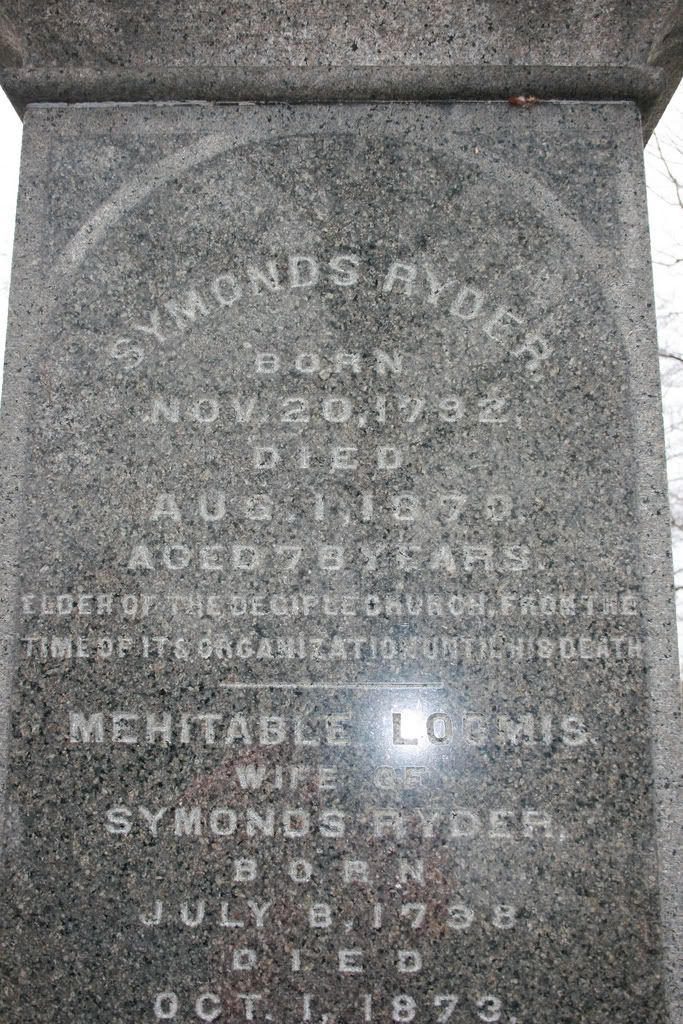
"Thus, while the moral the Thomas B. Marsh fable, i.e., that faith can be shattered over something inconsequential, is true enough, it would probably make sense to tell a different, more appropriate fable to illustrate that moral."
There is a different fable oft told in the Church to illustrate that moral--but I would like to show that its use is just as inappropriate, and perhaps the moral itself should be reexamined.
Symonds Ryder was a convert to the Church from the same Disciples of Christ congregation in Mantua, Ohio as Sidney Rigdon, Ezra Booth, and Eliza R. Snow and her family. He was made an Elder and called to serve a mission in a revelation that is now D&C 52. However, in the revelation, his name was spelled wrong. The misspelling of his name is often the only reason cited as the cause of his decision to then leave the church. (see B. H. Roberts in HC 1:260–61; Fawn M. Brodie in No Man Knows My History: The Life of Joseph Smith the Mormon Prophet, 118; Donna Hill in Joseph Smith: The First Mormon, 143; Cannon and Cook in Far West Record, 286; Dean C. Jessee in Papers of Joseph Smith, Volume 1: Autobiographical and Historical Writings, 511.) Probably the origin of this story is his funeral sermon preached in Hiram, Ohio, August 3, 1870, by B.A. Hinsdale.
"Ryder was informed, that by special revelation he had been appointed and commissioned an elder of the Mormon church. His commission came, and he found his name misspelled. Was the Holy Spirit so fallible as to fail even in orthography? Beginning with this challenge, his strong, incisive mind and honest heart were brought to the task of re-examining the ground on which he stood. His friend Booth had been passing through a similar experience, on his pilgrimage to Missouri, and, when they met about the 1st of September, 1831, the first question which sprang from the lips of each was--"How is your faith?" and the first look into each other's faces, gave answer that the spell of enchantment was broken, and the delusion was ended. They turned from the dreams they had followed for a few months, and found more than ever before, that the religion of the New Testament was "the shadow of a great rock in a weary land." (A. S. Hayden, Early History of the Disciples (1875), p. 251.)
Perhaps the misspelling was a bother to Ryder, but this one incident was hardly the sole reason for Ryder's departure. For one thing, spelling was more fluid in the 19th century and earlier. An attempt at standardized spelling in the U.S. did not begin until the appearance of Webster's “American Dictionary of the English Language” in 1828, and for at least a half century many words continued to be vociferously debated. American census-takers varied quite a bit in their reporting of people's names, showing that they were not asking people "How is that spelled?" but rather writing the name as they thought it should appear. Ryder's name appears as following in the U.S. census:
1830 census Hiram, Portage, OH: Simonds Rider
1840 census Hiram, Portage, OH: Symonds Rider
1850 census Hiram, Portage, OH: Simonds Rider, wife Mahitabel
1860 census Hiram, Portage, OH: Symonds Rider, wife Mehitable
1870 census Hiram, Portage, OH: Symands Rider, wife Mahitable
Ryder's commission with the misspelling of his name took place in June 1831 and may account for his not going to Missouri, but as noted he did not leave the church until Ezra Booth's return in September. In the meantime, Ryder became concerned about other developments. In a letter to A.S. Hayden he wrote:
"But when they [Joseph Smith and Sidney Rigdon] went to Missouri to lay the foundation of the splendid city of Zion, and also of the temple, they left their papers behind. This gave their new converts an opportunity to become acquainted with the internal arrangement of their church, which revealed to them the horrid fact that a plot was laid to take their property from them and place it under the control of Joseph Smith the prophet. This was too much for the Hiramites, and they left the Mormonites faster than they had ever joined them, and by fall the Mormon church in Hiram was a very lean concern." (Symonds Ryder, "Letter to A. S. Hayden," February 1, 1868, cited in Hayden, op. cit., pp. 220, 221.)It seems that the coming threat of enforced consecration might have been more of a problem for Ryder than the misspelling of his name. The influence of his disaffected friend Ezra Booth must have also had an effect upon Symonds.
The Religion 341 Church History manual states:
"From the outset the Church had an unpopular public image that was added to by apostates and nurtured by the circulation of negative stories and articles in the press. People gave many reasons for apostatizing. For example, Norman Brown left the Church because his horse died on the trip to Zion. Joseph Wakefield withdrew after he saw Joseph Smith playing with children upon coming down from his translating room. Symonds Ryder lost faith in Joseph’s inspiration when Ryder’s name was misspelled in his commission to preach. Others left the Church because they experienced economic difficulties."
Such a view boils the disaffection of these individuals down to a single, easily dismissed anecdote rather than acknowledging the difficult and complex issues they faced. This practice encourages members today to dismiss the very real concerns confronted by members who question aspects of the Church. "If you have questions, you must be sinning," the party line goes. In reality, there are multiple tangled and tortuous reasons why someone may develop a crisis of faith. Not only should we look deeper into the available documents to discover the motivations of historical figures, we should listen, and listen, and listen some more to come to a greater understanding of our friends and associates who question.
UPDATE: I've added this picture of Ryder's gravestone, with the name of the "Desciples" church spelled wrong!
Tuesday, June 30, 2009
Is Mental Adultery A Sin?
He Said:
I think that mental adultery is a sin. In fact I believe it usually leads to the loss of trust among married couples when a spouse engages even in something consider harmless like mental adultery. I am sure that many LDS would disagree thinking it a harmless action.
I remember years ago when Jimmy Carter, a devote Christian said in an interview published in the November 1976 issue of Playboy magazine, then-Governor Carter talked about the role of religion in his life. In one part he said:
Even though people made fun of him he was serious that as a good Christian he considered it a sin.
If you talk to most woman they admit to fantasizing about various men sometimes specific men and other times generalized men like a sheik, a movie star, a policeman etc. Many men also indulge in this kind of fantasy thinking about a co-worker or someone they do business with or go to church with.
Jesus Christ was very specific when he said:
Just like masturbation many Mormons and Christians justify mental adultery as a victimless sin. No one is harmed so no harm no foul they say. It is just harmless.
Neal A. Maxwell in his book Flood of Wonderful Light denounces such an attitude:
He said in his book We Talk of Christ We Rejoice in Christ: "Those who are filled with lust will not only commit mental adultery but may commit actual adultery, fornication, or other things just as bad that are "like unto it." (D&C 59:6.)
On the few occasions when I have let my mind wander and imagine a specific person I know it is demeaning and debasing for me to think of some woman I am not married to as an object for my sexual gratification. I am not sure I would ever have sex with anyone other than my wife.
Some people would say of come on just because you think about having sex with someone doesn't mean it will ever happen. In cognitive studies they find that the mind cannot distinguish between a mental action and a physical action. When we engage in fantasying the mind imprints it on our brain just like we really did it.
I think it weakens our will to remain faithful to a spouse when we are having marital problems if they are fantasying about someone else. Pretty soon they begin to act on those images. It might be a subtle progression like email or chatting with the person on the internet or flirting with them in the workplace or at church.
Even the Lord tells us that our very thoughts will condemn us:
I feel that the Church is clear that we should learn to control our thoughts. Personally I believe that even fantasizing can be a destructive thing in that it erodes trust when you spouse is thinking about others. In the LDS Church we promise to have our desire for our spouse alone. I think the Prophet Joseph Smith was wise when he put us under a covenant to do this.
She Said:
I don't think many Mormons would disagree with you on this one.
BUT... let me see if I can say this in a discreet manner... it seems like you are saying that you are against role playing activities within marriage. Should I get rid of that little French Maid costume? Or are you just saying a person shouldn't fantasize about another person who is real?
I think that mental adultery is a sin. In fact I believe it usually leads to the loss of trust among married couples when a spouse engages even in something consider harmless like mental adultery. I am sure that many LDS would disagree thinking it a harmless action.
I remember years ago when Jimmy Carter, a devote Christian said in an interview published in the November 1976 issue of Playboy magazine, then-Governor Carter talked about the role of religion in his life. In one part he said:
" I try not to commit a deliberate sin. I recognize that I'm going to do it anyhow, because I'm human and I'm tempted. And Christ set some almost impossible standards for us. Christ said, 'I tell you that anyone who looks on a woman with lust has in his heart already committed adultery.' I've looked on a lot of women with lust. I've committed adultery in my heart many times. This is something that God recognizes I will do--and I have done it--and God forgives me for it."
Even though people made fun of him he was serious that as a good Christian he considered it a sin.
If you talk to most woman they admit to fantasizing about various men sometimes specific men and other times generalized men like a sheik, a movie star, a policeman etc. Many men also indulge in this kind of fantasy thinking about a co-worker or someone they do business with or go to church with.
Jesus Christ was very specific when he said:
Behold, it is written by them of old time, that thou shalt not commit adultery;
But I say unto you, that whosoever looketh on a woman, to lust after her, hath committed adultery already in his heart.
Behold, I give unto you a commandment, that ye suffer none of these things to enter into your heart;
For it is better that ye should deny yourselves of these things, wherein ye will take up your cross, than that ye should be cast into hell. (3 Nephi 12:27-30.)
Just like masturbation many Mormons and Christians justify mental adultery as a victimless sin. No one is harmed so no harm no foul they say. It is just harmless.
Neal A. Maxwell in his book Flood of Wonderful Light denounces such an attitude:
Lest we rationalize the indulging of ourselves, holding on to ungodly things because these seem so private, we have only to look at Sodom and Gomorrah to see what cumulative misery consenting adults caused through their so-called victimless crimes!
He said in his book We Talk of Christ We Rejoice in Christ: "Those who are filled with lust will not only commit mental adultery but may commit actual adultery, fornication, or other things just as bad that are "like unto it." (D&C 59:6.)
On the few occasions when I have let my mind wander and imagine a specific person I know it is demeaning and debasing for me to think of some woman I am not married to as an object for my sexual gratification. I am not sure I would ever have sex with anyone other than my wife.
Some people would say of come on just because you think about having sex with someone doesn't mean it will ever happen. In cognitive studies they find that the mind cannot distinguish between a mental action and a physical action. When we engage in fantasying the mind imprints it on our brain just like we really did it.
I think it weakens our will to remain faithful to a spouse when we are having marital problems if they are fantasying about someone else. Pretty soon they begin to act on those images. It might be a subtle progression like email or chatting with the person on the internet or flirting with them in the workplace or at church.
Even the Lord tells us that our very thoughts will condemn us:
For our words will condemn us, yea, all our works will condemn us; we shall not be found spotless; and our thoughts will also condemn us; and in this awful state we shall not dare to look up to our God; and we would fain be glad if we could command the rocks and the mountains to fall upon us to hide us from his presence. (Alma 12:14.)
I feel that the Church is clear that we should learn to control our thoughts. Personally I believe that even fantasizing can be a destructive thing in that it erodes trust when you spouse is thinking about others. In the LDS Church we promise to have our desire for our spouse alone. I think the Prophet Joseph Smith was wise when he put us under a covenant to do this.
She Said:
I don't think many Mormons would disagree with you on this one.
BUT... let me see if I can say this in a discreet manner... it seems like you are saying that you are against role playing activities within marriage. Should I get rid of that little French Maid costume? Or are you just saying a person shouldn't fantasize about another person who is real?
Saturday, June 27, 2009
She Said: A Soul Mate for the South Carolinian
 South Carolina Governor Mark Sanford's affair with an Argentinian woman is only the most recent to hit the news lately. But his story is just a bit different than the usual. Unlike other cheating politicians, Sanford actually admits to having feelings for "the other woman." Clinton, Edwards, Spitzer, Vittner, and others all averred that the dalliance meant nothing, but Sanford had deep feelings for his paramour, María Belén Chapur. Is it worse to cheat because you are in love, or because you succumbed to the desire for physical gratification?
How embarrassing for Sanford that the emails to his Latin lover have been splashed all over the media. Robert Browning he is not, but it is titillating to read his passionate words. He calls her his "soul-mate" and laments transgressing a code of honor he has lived by all his life. But "despite the best efforts of my head my heart cries out for you, your voice, your body, the touch of your lips, the touch of your finger tips and an even deeper connection to your soul. I love you..." Sanford describes searching for answers in the scriptures (1 Corinthians 13) and retains a curious prudish reticence despite his passion:
“I could digress and say that you have the ability to give magnificently gentle kisses, or that I love your tan lines or that I love the curves of your hips, the erotic beauty of you holding yourself (or two magnificent parts of yourself) in the faded glow of night’s light — but hey, that would be going into the sexual details ...”
Other situations of this caliber have filled me with righteous indignation -- especially John Edwards' betrayal of his wife who was valiantly battling cancer. So I'm surprised to find that I have a teeny bit of sympathy for this Lothario. Am I too susceptible to a tragic love story?
Guy Murray and Kaimi had an interesting conversation about the affair on Facebook. Compare the two viewpoints on the political implications of this. Guy is of the opinion that "one can judge a man's character by the way he keeps vows and commitments to his wife and children. One who cannot be faithful to his own wife and children has serious character flaws that should be examined before assuming the national stage." He is also concerned that Sanford is "not the caliber of man I want leading a country designated as a land of promise, where if we keep the commandments we will prosper, but if we do not, will be swept from off its face."
On the other hand, Kaimi makes the point that personal issues are not as important as a political leader who has intelligence and skill. The qualities of intelligence, charisma, understanding of economics and geopolitics are not always correlated with moral value. "I mean, Michael Jordan was the best basketball player ever, despite his personal issues. Victor Hugo wrote enduring works (oft quoted by church leaders for their moral lessons), regardless of his own many affairs. I'd rather watch a game with Jordan than with a non-cheating but non-skilled player; and I'd rather read Les Mis than many other works which may have been written by folks who didn't cheat."
In reporting Sanford's infidelity, the Wall Street Journal notes:
For the Europeans, especially those of a Latin provenance, the sexual antics of politicians are of no more consideration in the judgment of their suitability for office than is what they eat for breakfast.
Examples include Silvio Berlusconi, the Italian prime minister; and the president of Paraguay, Fernando Lugo. Neither has found his political career to suffer due to his indiscretions.
So what do you think? Would you vote for or support a political leader who had an affair?
Friday, June 26, 2009
She Said: Solutions to the Menace of Unmarried Men
You have to wonder what makes these unmarried men an undesirable element, even a menace. I'm glad I saved Dr. B. from that fate.
Unmarried men represent 19 percent of all adults – some 37.6 million Americans -- and about 40 percent of all adult men in the nation. Among unmarried men, 67 percent have never been married, 23 percent are divorced, 6 percent are widowed, and 4 percent are separated. Only 5 percent of unmarried men have children under 18 living at home. Unmarried men are not as economically advantaged as their married counterparts. They have less health insurance, they are less likely to own their home, and they are not as likely to vote. They suffer from higher rates of loneliness and depression than unmarried women. They also have fewer ties to organized religion.
But we're going to have to get used to more unmarried men. In my research on this subject, I read an article called The China Syndrome, describing the upcoming social crisis faced by the Chinese due to their "one child only" limitation, the culture's traditional preference for boys, and legal abortion up to the ninth month.
In the U.S., one cause of the woman shortage is the declining birthrate. Because men tend to marry younger, a declining birthrate means there's a smaller pool of younger women than if the birthrate were steady. Other factors include 105 boy babies being born for every 100 girl babies, and older divorced men re-marrying younger never-married women.
Before we did this post, I didn't realize there were such decreasing opportunities for marriage among men. Mormons have traditionally interpreted Brigham's purported remark as meaning that men who would not marry were lessening the poor females' chances of finding connubial bliss. But not so in the 21st century!
More men than ever before want to get married and are unable to do so. As Dr. B. asks, should these men be penalized in the eternities when they did all they could but were unsuccessful in forming families in this life? Perhaps now is the time to reexamine Joseph Smith's views on polyandry. Joseph contracted polygamous marriage to nine women who were already married. Is this an answer to the marriage crunch of today?
Unmarried men represent 19 percent of all adults – some 37.6 million Americans -- and about 40 percent of all adult men in the nation. Among unmarried men, 67 percent have never been married, 23 percent are divorced, 6 percent are widowed, and 4 percent are separated. Only 5 percent of unmarried men have children under 18 living at home. Unmarried men are not as economically advantaged as their married counterparts. They have less health insurance, they are less likely to own their home, and they are not as likely to vote. They suffer from higher rates of loneliness and depression than unmarried women. They also have fewer ties to organized religion.
But we're going to have to get used to more unmarried men. In my research on this subject, I read an article called The China Syndrome, describing the upcoming social crisis faced by the Chinese due to their "one child only" limitation, the culture's traditional preference for boys, and legal abortion up to the ninth month.
"The one-child policy is 25 years old, so the first generation is just now reaching marriage age, and for China that's a big problem because it is estimated that as many as 40 million of its young men could spend their lives as bachelors."
In the U.S., one cause of the woman shortage is the declining birthrate. Because men tend to marry younger, a declining birthrate means there's a smaller pool of younger women than if the birthrate were steady. Other factors include 105 boy babies being born for every 100 girl babies, and older divorced men re-marrying younger never-married women.
Before we did this post, I didn't realize there were such decreasing opportunities for marriage among men. Mormons have traditionally interpreted Brigham's purported remark as meaning that men who would not marry were lessening the poor females' chances of finding connubial bliss. But not so in the 21st century!
More men than ever before want to get married and are unable to do so. As Dr. B. asks, should these men be penalized in the eternities when they did all they could but were unsuccessful in forming families in this life? Perhaps now is the time to reexamine Joseph Smith's views on polyandry. Joseph contracted polygamous marriage to nine women who were already married. Is this an answer to the marriage crunch of today?
Thursday, June 25, 2009
She Said: Unintended Consequences of Church Correlation
Formal organization of a Correlation Committee in the LDS Church occurred in 1908. At this time, the auxiliary organizations which had been independent and operated on a local level, were elevated to a general church level, under the direction of the First Presidency and the Quorum of the Twelve Apostles.
Further reorganization occurred during the early 1960s, and in 1972 the Correlation Department was extended to the planning, preparation, translation, printing, and distribution of church materials. The intent of correlation in the Church is as follows:
Unfortunately, there were some perhaps unintended consequences of Church correlation which have occurred since the early '70's. Here are some of the things that I see as regrettable:
It is comfortable for members in the continental U.S. to be able to visit anywhere in the world and be able to find their way around the church building. I have no doubt I could find the Relief Society room in any chapel in the world. Perhaps it is soothing for some to know that wherever they go, Mormons are hearing the same Sunday School lesson. But, as Claudia Bushman has said concerning correlation,
Are the advantages of a correlated Church worth having chapels which look like Kentucky Fried Chicken franchises? Are they worth being served a "Big Mac" Sunday School lesson?
____________________________________________
[1] "...curriculum reform paled in significance next to [Harold B. Lee's other goals of reining in the auxiliary organizations and placing day-to-day control of the church in the hands of the Twelve."
"[We] could see the auxiliaries running the Church, as it were. We had no Priesthood board but they had large and talented and powerful Mutual boards and Sunday School boards and Relief Society boards and Primary boards. And they scattered throughout the Church teaching their message, and they were talented people and taught so well that the auxiliaries of the Church were far more effective and powerful in the members idea and view than were the Priesthood quorums. So I would say, to characterize the Church prior to Correlation, that the auxiliaries ran it and everything took second place to them." (A. Theodore Tuttle from an interview of 1977 quoted in David O. McKay and the Rise of Modern Mormonism, by Gregory A Prince, Wm Robert Wright (2005) pp. 155, 143)
[2] see Empowerment and Mormon Women’s Publications by Vella Neil Evans, summarized in a post at FMH.
[3]
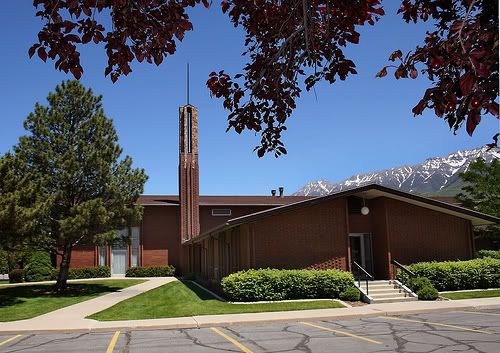
LDS Chapel in Orem, Utah

LDS Chapel in Bangnaa, Thailand

LDS Chapel in Mexico City, Mexico
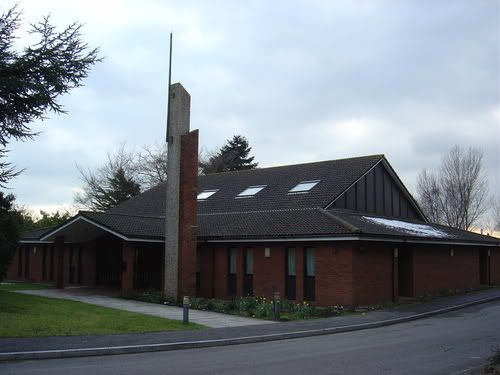
LDS Chapel in Holdenhurst, U.K.
Further reorganization occurred during the early 1960s, and in 1972 the Correlation Department was extended to the planning, preparation, translation, printing, and distribution of church materials. The intent of correlation in the Church is as follows:
- Maintaining purity of doctrine.
- Emphasizing the importance of the family and the home.
- Placing all the work of the Church under priesthood direction.
- Establishing proper relationships among the organizations of the Church.
- Achieving unity and order in the Church.
- Ensuring simplicity of Church programs and materials.
Unfortunately, there were some perhaps unintended consequences of Church correlation which have occurred since the early '70's. Here are some of the things that I see as regrettable:
- Curricula and policies which impose a mountain-states U.S. framework on the entire world and is not attuned to actual local circumstances.
- Decreased autonomy in auxiliaries, especially for women. [1]
- Gradual decline in creative endeavors in wards and stakes (musical performances, three act plays, hand work projects, welfare farm work, speech contests, instructional and recreational dances, road shows)
- Suspicion and hostility toward publications not known to be "approved." (women's and auxiliary publications [2], private publications like Dialogue, Sunstone, and most of the books not published by Deseret; extending even to the Journal of Mormon History and BYU Studies).
- Limiting of approved music to be performed in Church meetings, excluding classical sacred music as well as cultural and traditional pieces.
- Loss of creativity, immediacy and interest in lessons and talks, art, architecture and music. [3]
It is comfortable for members in the continental U.S. to be able to visit anywhere in the world and be able to find their way around the church building. I have no doubt I could find the Relief Society room in any chapel in the world. Perhaps it is soothing for some to know that wherever they go, Mormons are hearing the same Sunday School lesson. But, as Claudia Bushman has said concerning correlation,
"I am not convinced that unity is as desirable as some seem to be. Unity requires much squelching of initiative."
Are the advantages of a correlated Church worth having chapels which look like Kentucky Fried Chicken franchises? Are they worth being served a "Big Mac" Sunday School lesson?
____________________________________________
[1] "...curriculum reform paled in significance next to [Harold B. Lee's other goals of reining in the auxiliary organizations and placing day-to-day control of the church in the hands of the Twelve."
"[We] could see the auxiliaries running the Church, as it were. We had no Priesthood board but they had large and talented and powerful Mutual boards and Sunday School boards and Relief Society boards and Primary boards. And they scattered throughout the Church teaching their message, and they were talented people and taught so well that the auxiliaries of the Church were far more effective and powerful in the members idea and view than were the Priesthood quorums. So I would say, to characterize the Church prior to Correlation, that the auxiliaries ran it and everything took second place to them." (A. Theodore Tuttle from an interview of 1977 quoted in David O. McKay and the Rise of Modern Mormonism, by Gregory A Prince, Wm Robert Wright (2005) pp. 155, 143)
[2] see Empowerment and Mormon Women’s Publications by Vella Neil Evans, summarized in a post at FMH.
[3]
Monday, June 22, 2009
She Said: Seeking to be Great and Good and Wise
So.... with all of the health risks Dr. B. mentioned above, WHY is the "eating meat sparingly" portion of the Word of Wisdom ignored in the modern Church? It continues to be taught in our lessons and manuals, but there isn't much of an effort made to cut meat out of our diets. When we go to our temple recommend interview and are asked if we obey the Word of Wisdom, if we have taken as much as one sip of wine, we would feel constrained to answer in the negative. But the amounts of meat we have eaten does not even cross our minds. Is this because the word "sparingly" is not defined? Is it because, with modern refrigeration methods we don't think the meat restriction applies any more? Or is it just inconvenient in our fast-food world to structure a diet around grains and fresh fruits and vegetables?
I really find it so odd that today's Mormons have taken the Word of Wisdom so strictly with regards to "hot drinks" (redefined as coffee and tea), that they will often rid their diets of any trace of caffeine, including soft drinks, aspirin, etc. Yet when it comes to eating meat, there is little effort to follow the guidelines.
Two Sundays ago we had an investigator sitting with our family during Church and the congregation sang the song: "In Our Lovely Deseret:"
I wondered, uncomfortably, what our investigator was thinking as we sang this hymn. I knew it was very different than what is sung in the worship services in other churches. Our health code is very important to us, but perhaps we don't want to seem TOO peculiar or different. How much does this have to do with how we interpret the Word of Wisdom? How strange would Mormons be if we didn't frequent McDonald's?
Dr. B. and I have been talking about this subject this week and in our menu plans we've cut down the amount of meat we'll be eating in the next 7 days. But we find that we still have difficulty not planning meals, especially dinner, around a meat dish.
Yesterday's stuffed mushrooms didn't go over very well.
I really find it so odd that today's Mormons have taken the Word of Wisdom so strictly with regards to "hot drinks" (redefined as coffee and tea), that they will often rid their diets of any trace of caffeine, including soft drinks, aspirin, etc. Yet when it comes to eating meat, there is little effort to follow the guidelines.
Two Sundays ago we had an investigator sitting with our family during Church and the congregation sang the song: "In Our Lovely Deseret:"
That the children may live long, and be beautiful and strong
Tea and Coffee and Tobacco they despise:
Drink no liquor, and they eat but a very little meat,
They are seeking to be good and great and wise.
I wondered, uncomfortably, what our investigator was thinking as we sang this hymn. I knew it was very different than what is sung in the worship services in other churches. Our health code is very important to us, but perhaps we don't want to seem TOO peculiar or different. How much does this have to do with how we interpret the Word of Wisdom? How strange would Mormons be if we didn't frequent McDonald's?
Dr. B. and I have been talking about this subject this week and in our menu plans we've cut down the amount of meat we'll be eating in the next 7 days. But we find that we still have difficulty not planning meals, especially dinner, around a meat dish.
Yesterday's stuffed mushrooms didn't go over very well.
Friday, June 19, 2009
Shortening the Three Hour Meeting Block
She Said:
I grew up a PK (preacher's kid) which is similar to being the child of a Mormon Bishop, but for your whole life. I learned early what it was like to hang around the church for hours. Both Dr. B. and I love church meetings, and in our early years we thought nothing of going to two wards' full 3-hour schedule of meetings. But these days, the long hours are starting to wear on me. Am I getting a little ADHD in my old age? Or is it that I've heard it all before, and there is nothing new under the sun?
For many years rumors have circulated that church meetings were to be pared down to 2 hours. Usually the rumors have it that Sunday School would be the meeting to go, with members expected to provide scripture study in the home. I don't think these rumors will ever come to fruition, but I want to explore whether it would be a good thing to cut down on our Sunday services.
In today's fast-paced world, 2 hours is a long time to sit still and listen to a lecture-type format. It is especially difficult for families with children. Small children might be better served with a shorter, more varied program during the Primary time. A 30-minute classroom lesson, 15-20 minutes of singing, and a 5 or 10 minute Sharing Time message sounds like a perfect schedule for ages 3 to 11. This would also be less of a burden on all of the many members that it takes to keep a Primary fully staffed.
Adults might appreciate the format, too. One thing I miss about my Protestant upbringing was the coffee hour that followed our meetings. While I wouldn't necessarily suggest something similar for Mormons, I think that if our meetings were shorter, we might be chipper enough to socialize for a while afterwards, instead of rushing everyone home. For me, a big part of going to church is the fellowship, and even with our 3-hour blocks, we don't experience much of that, unless we're skipping our classes.
The biggest disadvantage I see to cutting out Sunday School would be less gospel study. But as it stands now, I think our Sunday School time is ineffective and boring. Any scriptural learning that takes place could easily be replaced by more emphasis in Sacrament Meetings on centering talks around scriptural topics, and a few additions to PH/RS. Perhaps special manuals could be prepared to assist families in setting up a Sunday School hour in their home. Many families would do a fine job at this, although I realize that for some it might take too much effort and fall by the wayside. I'd love to see small group scripture study classes during the week for those who are interested in coming together for discussion.
Do you see any other disadvantages to cutting our Sunday services by an hour?
He Said:
From time to time I hear that the Church is considering doing away with Sunday School so we as parents can better teach our kids the gospel. If it is anything like FHE that means we may or may not have more time for sleeping since FHE is a hit and miss proposition at my home. I think it will be sporadic for parents to actually use a manual and teach their kids as BiV suggests. I would probably try it out for a year or two or even five but it would probably be a very uneven treatment for my various kids. Over the course of several years the manual would get boring. I guess they could throw in the Preach My Gospel or some other manual to liven it up but for all intents and purposes they would need more than one manual because parents and kids would get bored. I suspect they would have us use the priesthood manuals which is way over kids heads just to save on correlation.
My oldest three children born during my youth experienced more concentrated gospel study which included three attempts at reading the Book of Mormon with one successful completion in an eighteen year period. I think a Sunday School manual might work for one or two cycles but for my eight children there would be gaps in their religious education. At least in a formal Sunday School class there is a week after week attempt to get them to engage with the gospel. Sometimes even when they are being obtuse the gospel seems to sink in. Between primary or young men or young women and sunday school with seminary my children have learned the gospel. I personally would hate to see it go for their sakes.
In my case the gospel doctrine class is a big snooze. I have to shut my mouth to keep from monopolizing the class. Nine times out of ten I know more than the teacher who many times preaches false doctrine or the gospel according to them. I have read most of the statements of the general authorities and can quote them til I'm blue in the face. Students and the teachers don't appreciate a know it all. I wish there were a beginner, intermediate, and advanced gospel doctrine class since one class doesn't fit all. I humble myself by sitting through these classes week after week. I always remember J. Rebuen Clark Jr. on his death bed saying he wants to remain faithful. To me getting through a gospel doctrine class for the fifth cycle is enduring to the end.
An interesting thing about the consolidated three hour block was it was supposed to free people up to do more Christian acts and do more gospel related things. However the only thing I noticed was that home teaching shifted in to the slot. Prior to that it was done mostly on week nights. Eventually it became an expectation that on the last Sunday of the month home teachers would want to come over. I resent my home teachers coming over on Sunday because it cuts in to my rest time and my occasional hymn singing. Every few months I like to sing out of pitch from the hymnbook and subject any child I don't see singing to having to sing with me.
I have visited a lot of LDS over the years and most of them seem to enjoy Sunday as a time for socializing with members. A few of the more stalwart invited us over for dinner a few times a year. Youth like to go to each others houses and hang out and end up eating with them occasionally so there is a lot of interaction during the primary and mutual years. In the last ten years I probably remember having a whole family over to our house for dinner or parties less than five or six times a year that leaves forty-five weeks for resting, remember on the seventh day even the Lord rested.
I personally like the earliest morning block so it can free me up to either do genealogy when I am in a quasi-righteous mood or to watch the Big Love, the Chicago Cubs game or the World Series of Poker when I am in a who cares mood. If there were a two hour block I might do the same amount of genealogy which runs in cycles. When my wife is in to it I am more gungho when she isn't I have a hard time now that my eyesight is diminishing. It is a back breaking tedious process to crank a microfilm reel or to even search on Ancestry or Family Search.
Mostly I just spend the time sleeping around eating lunch/dinner so I can be rejuvenated for the coming work week. Unfortunately I spend a lot of time taking my eight children to different firesides, bishop youth discussions or over to friends homes. The latter I try to not do and make the other kids in the ward come to our house. Once in a blue moon my son and I go home teaching to one of the three families. An extra hour means we could go earlier home teaching since we could get our nap in sooner or on the other three weeks I could watch more gospel movies or the Big Love which is tangentially LDS related. Don't worry, I change the channel if I think there is any sex happening to keep the Sabbath Day holy.
Take the Poll:
Thursday, June 18, 2009
She Said: Surgical Sterilization
Well, let's see.
If speculation is the order of the day, I will venture into this subject. If we are restored to our perfect form in the afterlife, surely any surgeries of this type will be negated. However, it makes sense to me that someone who has decided so strongly that they don't want any more children that they are willing to undergo such an invasive procedure to stop them from coming may find that they have made an eternal decision. Because I have many moments when I fear this may be so, I wouldn't consider such an option for myself or for DH.
If we are getting personal, I will agree that for the first 14 years of our married life I was content to let children arrive when they might. But after 8 children and when I reached my 40th birthday, it was time to reconsider. Though the birth control we use now is not a surgical, chemical, or barrier form, it is birth control nonetheless. It is calculated to stop children from coming into our family. What makes this so very different on an eternal level than some of the other types?
One more admission: I think I burned myself out here in this earth life with my paltry 8 children. I can't imagine having millions of spirit children in the eternal realms, no matter how perfect my body is or how easy pregnancy and childbirth might be then. I loved bearing my children, nursing them and raising them. But an eternity as a mother of spirit children doesn't fill me with longing bliss--it rather makes me tired. I don't think I'd be very good at it, and as a motivator for living worthy to gain an exaltation, it isn't quite up to snuff. I've said before, give me a harp and a cloud and just put me in the choir.
Tuesday, June 16, 2009
She Said: Adoption
The LDS Church believes that every effort should be made to assist young women who conceive out of wedlock to first try to establish an eternal family relationship. If the unwed parents are unable or unwilling to marry, they are then encouraged to place the child for adoption, preferably through LDS Family Services.
The Church stresses that unwed parents who do not marry should not be urged to keep the infant as a condition of repentance or out of some desire to care for one's own. They consider that the best interests of the child in this situation is to be placed for adoption. The Proclamation on the Family states:
The wording of this sentence makes me uneasy and raises a few doctrinal questions. If children are "entitled" to birth within just such a traditional family, then why does God permit them to come to earth in such varied circumstances as they do? I presume he has control over where the spirits are sent, over men's and women's fertility, and such. I am tempted to believe that when a child is sent to a certain mother that she is "entitled" to raise it as her own.
Since I now have 6 girls who could potentially bear children, this is a topic of concern to me. I would be devastated if a child who was born into our family was given up for adoption. I would be willing to provide any support needed for such a child to remain in the family. I am also concerned that because of the Church's policy, LDS Social Services is not providing much needed information and support so that young women can make informed decisions. Michelle Renaud provides one example involving Don Staheli, who worked for LDS Family Services and now is Regional Representative of the Twelve.
The LDS Family Services site "It's About Love" shows how heavily slanted this organization is toward convincing a young woman to give her child up for adoption. The many options are explored with a purpose of convincing the pregnant woman that the best and most moral choice is adoption.
I have seen a great change in this policy just in the course of my lifetime. When I first joined the Church, the counsel to young women was that they should keep and raise their children. It often was suggested to them that this would be part of the repentance process. I don't feel that this policy, any more than the current one, is perfect for every situation. I feel that the families involved should be counseled on their options and encouraged to pray and make their own decisions based on their desires and family resources. Since the preferred counsel has changed so much over the years, I feel satisfied in declaring that giving up children for adoption is merely a policy currently preferred by Church agencies which may change and is not doctrinal. I don't think that anyone can make a blanket statement that certain types of families or individuals are any less able to successfully raise children than the traditional, two-parent, husband and wife pair.
What do you think?
The Church stresses that unwed parents who do not marry should not be urged to keep the infant as a condition of repentance or out of some desire to care for one's own. They consider that the best interests of the child in this situation is to be placed for adoption. The Proclamation on the Family states:
Children are entitled to birth within the bonds of matrimony, and to be reared by a father and a mother who honor marital vows with complete fidelity.
The wording of this sentence makes me uneasy and raises a few doctrinal questions. If children are "entitled" to birth within just such a traditional family, then why does God permit them to come to earth in such varied circumstances as they do? I presume he has control over where the spirits are sent, over men's and women's fertility, and such. I am tempted to believe that when a child is sent to a certain mother that she is "entitled" to raise it as her own.
Since I now have 6 girls who could potentially bear children, this is a topic of concern to me. I would be devastated if a child who was born into our family was given up for adoption. I would be willing to provide any support needed for such a child to remain in the family. I am also concerned that because of the Church's policy, LDS Social Services is not providing much needed information and support so that young women can make informed decisions. Michelle Renaud provides one example involving Don Staheli, who worked for LDS Family Services and now is Regional Representative of the Twelve.
The LDS Family Services site "It's About Love" shows how heavily slanted this organization is toward convincing a young woman to give her child up for adoption. The many options are explored with a purpose of convincing the pregnant woman that the best and most moral choice is adoption.
I have seen a great change in this policy just in the course of my lifetime. When I first joined the Church, the counsel to young women was that they should keep and raise their children. It often was suggested to them that this would be part of the repentance process. I don't feel that this policy, any more than the current one, is perfect for every situation. I feel that the families involved should be counseled on their options and encouraged to pray and make their own decisions based on their desires and family resources. Since the preferred counsel has changed so much over the years, I feel satisfied in declaring that giving up children for adoption is merely a policy currently preferred by Church agencies which may change and is not doctrinal. I don't think that anyone can make a blanket statement that certain types of families or individuals are any less able to successfully raise children than the traditional, two-parent, husband and wife pair.
What do you think?
Monday, June 15, 2009
She Said: Baptism for the Dead
FYI, Dr. B.--I looked on the IGI and the temple work for Julius Scaliger was done in Provo in 1993--so Hugh Nibley could very well have done these ordinances for his hero.
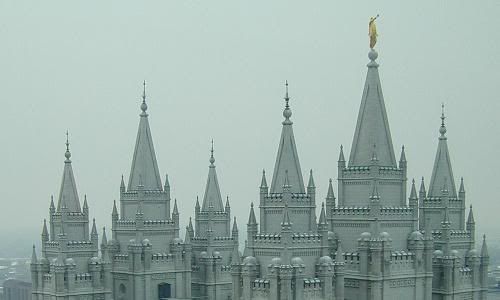
I enjoyed reading Dr. B.'s article on Helen Radke and the LDS practice of Baptism for the Dead. Because I am LDS, I see quite clearly the rationale behind the desire of members of the Church not only to provide ordinances for their own deceased relatives, but for everyone who has lived on the earth. I do sympathize with non-members who have requested that we refrain from associating their family members with our Church, but I have to confess that I have no strong feelings on this issue. It seems to me that if someone does not believe in the Mormon Church, these actions might easily be dismissed. If someone baptized my grandmother into the Church of the Flying Spaghetti Monster, I would scarcely take notice, other than to laugh. But I have no wish to offend. If the following joke makes you cringe, then you will probably be able to appreciate, better than I, the affront that non-members take at our practice of vicarious baptism:
The Church's current policy attempts to straddle that fine line between avoiding offense to others and following religious dictates of our own. Publicly the Church tells members to submit only their own family names to the temple, but because there is no formal restriction on names that are submitted, in practice anyone can submit any name they would like.[1] With the new family search program, a member can clear names for temple work on their own home computer. Though the program warns the member to check for duplicates, or to have certain names cleared, members can choose to override these cautions and submit the name nonetheless. The names are printed out on a sheet of paper and taken to a desk at the temple, where it is a mere formality to prepare the pink or blue name slips which will allow the ordinances to be completed.[2]
Even with the attention that Helen Radke and others have brought to this practice, I see no change contemplated for the procedure of submitting names to the temple. And other religions are becoming increasingly aware of this. In response, the Catholic Church has instructed parish priests to discontinue the microfilming of parish registers by the LDS. This was freely allowed in the past. And Jewish leaders have issued statements protesting the "wrongful practice of baptizing the Jewish dead," noting their reasons that they believe it is disrespectful and harmful.
There will likely be continued tension between those who feel that the receipt of LDS ordinances is vital to the salvation of all mankind, and those who are offended by the suggestion that their family members' chosen religion or lack of religion was not good enough.
_____________________________________________
[1] Church policy states: "Please do not submit the names of deceased celebrities and historical personalities, including those of royal or noble lineage or early LDS Church leaders and their families, or of persons born in European countries prior to A.D. 1500, regardless of your relationship to them. Though the names may not yet appear on the Ordinance Index, temple work for most of the people in these categories has already been done. Sometimes when we study about such people, we feel a spiritual affinity to them, but we should not submit their names for temple work. If names are sent in counter to this policy, they must be cleared by the Temple Department. The Medieval Family Unit (1-800-346-6044) can help you avoid duplicating ordinances for those born before A.D. 1500."
[2] Because the formal "clearance" by higher Church authorities is not always sought before the name is presented at the temple, individuals such as Adolph Hitler and Ervil LeBaron have been baptized posthumously. It does not follow that a General Authority approved of the ordinance.
I enjoyed reading Dr. B.'s article on Helen Radke and the LDS practice of Baptism for the Dead. Because I am LDS, I see quite clearly the rationale behind the desire of members of the Church not only to provide ordinances for their own deceased relatives, but for everyone who has lived on the earth. I do sympathize with non-members who have requested that we refrain from associating their family members with our Church, but I have to confess that I have no strong feelings on this issue. It seems to me that if someone does not believe in the Mormon Church, these actions might easily be dismissed. If someone baptized my grandmother into the Church of the Flying Spaghetti Monster, I would scarcely take notice, other than to laugh. But I have no wish to offend. If the following joke makes you cringe, then you will probably be able to appreciate, better than I, the affront that non-members take at our practice of vicarious baptism:
"I cannot condemn the Mormons’ posthumous baptisms, because I myself have been tasked by God Herself to baptize dead Mormons into my church and then bless them with posthumous plural interracial gay marriages. In fact, here comes another marriage right now…
*blink*
Ladies and Gentlemen, I present to Mr. Joseph Smith, Mr. Brigham Young, Mr. Idi Amin, and Mr. Pol Pot. What God has joined together let no man put asunder!"
The Church's current policy attempts to straddle that fine line between avoiding offense to others and following religious dictates of our own. Publicly the Church tells members to submit only their own family names to the temple, but because there is no formal restriction on names that are submitted, in practice anyone can submit any name they would like.[1] With the new family search program, a member can clear names for temple work on their own home computer. Though the program warns the member to check for duplicates, or to have certain names cleared, members can choose to override these cautions and submit the name nonetheless. The names are printed out on a sheet of paper and taken to a desk at the temple, where it is a mere formality to prepare the pink or blue name slips which will allow the ordinances to be completed.[2]
Even with the attention that Helen Radke and others have brought to this practice, I see no change contemplated for the procedure of submitting names to the temple. And other religions are becoming increasingly aware of this. In response, the Catholic Church has instructed parish priests to discontinue the microfilming of parish registers by the LDS. This was freely allowed in the past. And Jewish leaders have issued statements protesting the "wrongful practice of baptizing the Jewish dead," noting their reasons that they believe it is disrespectful and harmful.
There will likely be continued tension between those who feel that the receipt of LDS ordinances is vital to the salvation of all mankind, and those who are offended by the suggestion that their family members' chosen religion or lack of religion was not good enough.
_____________________________________________
[1] Church policy states: "Please do not submit the names of deceased celebrities and historical personalities, including those of royal or noble lineage or early LDS Church leaders and their families, or of persons born in European countries prior to A.D. 1500, regardless of your relationship to them. Though the names may not yet appear on the Ordinance Index, temple work for most of the people in these categories has already been done. Sometimes when we study about such people, we feel a spiritual affinity to them, but we should not submit their names for temple work. If names are sent in counter to this policy, they must be cleared by the Temple Department. The Medieval Family Unit (1-800-346-6044) can help you avoid duplicating ordinances for those born before A.D. 1500."
[2] Because the formal "clearance" by higher Church authorities is not always sought before the name is presented at the temple, individuals such as Adolph Hitler and Ervil LeBaron have been baptized posthumously. It does not follow that a General Authority approved of the ordinance.
Subscribe to:
Posts (Atom)


