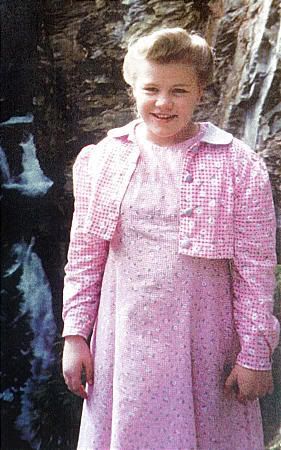
 Elissa Wall with Lisa Pulitzer, Stolen Innocence: My Story of Growing Up in a Polygamous Sect, Becoming a Teenage Bride, and Triumphing over Warren Jeffs. New York: William Morrow, 2008.
Elissa Wall with the help of Lisa Pulitzer does a good job painting the FLDS as a very repressive people with some very controlling behaviors and Warren Jeffs as a scum ball. I have never had the respect that my wife BiV has for fundamentalists and her romanticized view that they are just good religious people trying to live the "principle." Wall reinforced my viewpoint that living polygamy is almost impossible due to the selfish behavior of the participants to control one another. I think if I were a member of the FLDS Church in my current maritial condition that I would have ended up much like Wall's father with my original wife in the end. My own children might have very well gone down the road that Wall's siblings did--or end up the opposite, as very gungho FLDS.
The premise behind this book is that fourteen is too young to lose your innocence, with which most of us in the United States or Canada that are not FLDS would have to agree. Being the parent of seven daughters I personally would not have allowed Wall to be married at such a young age. Even if I were a member of the FLDS faith I wouldn't have let any of my children go anywhere without my keeping in contact on a weekly or monthly basis even if I had been stripped of the priesthood like Wall's father. If anything I would have been more determined to regain my children. I would have known if anyone was trying to coerce a daughter of mine into a marriage that wasn't mutually agreed on by all parties that it just wouldn't happen. Her father is not totally blameless here since he was an absent caregiver out of choice. I read constantly how Wall was talking to different people by cell phone so why not call her dad from time to time. The FLDS are not like the Amish--they drive cars, play in the symphony orchestra and have telephones. They aren't totally as shut off from the world as Wall portrays in her book. She did after all work at the Mark Twain where I am sure even outside truckers frequented for a good home-cooked meal and where she got to know her future lover and current husband.
Wall paints a picture of her family being tragically broken apart by the FLDS leaders for their inability to get along with one another. The FLDS leaders were just trying to help, as I see it, the father being a weak leader and unable to control his family. I saw something even more ominous in that her own mother destroyed her father's family. The mother is very controlling and comes from a fundamentalist family that is well-connected while the father is a convert and has little influence.
Wall and Pulitzer paint a picture of passivity for the mother but from the readings I see that she was quite forceful when she wanted to be particularly in dissolving her marriage from Wall's father. When the mother can't get her own way she takes down the whole family so she can get herself married to a high ranking FLDS leader who is some old guy close to death. The mother seems happy when she remarries now that she is near to the action again. The mother was very manipulative and Wall downplays her own mother's role as being passive when in reality she probably had a great deal of input in to what happened in Wall's life including the marriage that toppled the FLDS leadership.
We learn in the end of the book that Fred Jessop rather than Warren Jeffs orchestrated the marriage. The mother had direct access to Jessop since she occasionally slept with him. She could have suggested when the daughter should be married or even the timing. I find it hard to believe she didn't say something to Jessop in a tender moment. Even after Wall is married the mother is always encouraging Wall to get along with her new husband. Wall never really makes much of an effort to get along but rather goes out of her way to be disobedient. It makes you feel sorry for the husband who is just some teenager without much social skills. She is constantly denigrating him including when he testifies near the end of the book. She never gives the guy a break as you paints him as a buffoon who is weak and spineless. I mean when her boyfriend goes out with a larger group and tells him to buzz off he goes quietly. Then he testifies he would have stayed married to her.
Then when the family members leave the FLDS faith one by one she paints it as if they are merely victims of a bad system when in reality it is their desire to live their lives differently than the what mainstream FLDS follow. Her sisters run off with men they fall in love with as do many of her friends. The truth is that they all left because they wanted to and wanted to follow their own lifestyles. Walls could have left sooner if she really had wanted to since she went away at least twice to Oregon and Canada. I think her staying with her former husband was more complex than simply wanting to remain "sweet."
In the end she leaves the very same way committing adultery, divorcing someone she married for time and all eternity and taking down Warren Jeffs. I agree that she lost her innocence involuntarily when she was forced in to marriage at fourteen but I disagree that the sequence of events had to transpire the way they did after that point. I think she could have adhered to her beliefs and still have broken free. Being a fundamentalist didn't help her live a very moral life in the end. Elissa Walls voluntarily lost the rest of her innocence by her choices from sixteen through eighteen. If Wall were really the good faithful Saint that she portrays herself as being, she certainly wouldn't have been out there listening to Bon Jovi, questioning her religious beliefs, drinking beer in the deseret, fighting with her husband, not having children with him nor sleeping with Lamont Barlow. I give her the benefit of the doubt that she was immature but there are literally hundreds of FLDS youth and tens of thousands of LDS youth who wouldn't have done any of those things particularly committing adultery when they are sealed to another man for time and all eternity.
I don't fault her for taking down Warren Jeffs for that she should be commended. I think she was hypocritical for absolving her father and mother who in my opinion caused the situation when they converted to the FLDS faith. To be fair Wall should have also taken down her own father for getting her in the mess in the first place as well as Fred Jessops (if he had lived longer), and any and all FLDS men who pressure girls under eighteen in to forced marriages.
Warren Jeffs only had the power that Wall and the other believers gave to him. The group had a few opportunities to stop him and looked the other way. The Centennial group proved that when their feet did the walking. If the FLDS had stood up to Jeffs he would have had to back down. Even today they are feeling the heat from the Texas debacle. Now that outside forces are putting pressure on them they are finally able to say we won't be bad anymore. Now they have a revisionist mentality we don't engage in girls under eighteen being married is their public statement.
I think from my reading that most FLDS are pretty spineless people including the heroine of the story. For one thing I think the whole concept of letting people out of marriages and giving them to other people is against what Jesus taught except for the cause of fornication or adultery no divorces should be given. If polygamous preached there will be no divorce except for physical abuse or adultery there would be fewer broken homes like Wall's parents had. The father would then have been put to the test since he was let off as an absent parent.
The problem with polygamy is that anyone can get out of a bad marriage if they want it bad enough and complain hard enough. Wall wants to say she tried a couple of times but when she had Allen in the position where she could have delivered the death blow to her marriage she slept in her car and avoided him while messing around with Lamont. If she had gone every other week to Jeffs and said I am going to run off with Barlow he would have whisked her off some place else and gotten her out of the marriage. Of course she would have been married to who Jeffs and the leading elders wanted not Barlow perhaps. She got the same effect in the end she was free but she and Barlow are now on the outside looking in. The truth is she wanted to be with Lamont Barlow not whoever Jeffs would have chosen.
I think Wall and the Utah court case and the recent events in Texas have started to reform their practices. Will they completely adhere to this practice of only marrying legal age wives? I doubt it. I mean after all they are breaking the U.S. law by entering in to polygamy in the first place. I think if they were smart and didn't want the United States government to crack down on all fundamentalist like they did one hundred years ago they would agree among all independent groups and FLDS groups to only marry legal age wives and stick to that practice. Otherwise I think they should suffer the full extent of the law and should be prosecuted.
I don't deny Warren Jeffs got what he had coming and he did what she probably said. But her mother who was her legal guardian gave permission and she should also be prosecuted. She knew full well what was going on. Her mother is no more the dupe of the FLDS than other FLDS woman. Unlike a bunch of innocent women in the Texas compound who didn't have underaged daughters married off Wall's mother did and in my opinion should have her remaining children given to non-FLDS family members or placed in protective services.
In the end the principles Wall purported to believe in didn't keep her on the moral path. Her victory is that she took down a bad man in a very screwed up cult. I admire her for getting out of a bad situation but she could have done it a little more nobly. She would have had a greater victory if she had taken Jeffs down while remaining true to her moral compass.