Hmm, Dr. B's last post sure sounded like a reprimand to me, did it sound like that to you?
He's right -- I do burn the candle at both ends. I used to be a "morning person," retiring at about 10pm and getting up around 6am. It all changed by the time my eighth child had arrived. I found myself so thrilled when they were all in bed that I finally had time to myself to read, do a project, or just have some free time alone, that I took to staying up quite late at night. This habit has continued over the years. I now go to sleep about 12 or 1:00 at night and wake up just before 7. During the school year I have to get up just before 6. This gives me 6 or 7 hours of sleep, which I think is rather reasonable. A few times a month I find myself involved in something to the point that I stay up until 2 or 3.
Every once in a while I will make an effort to get more sleep. But it's not that important to me. What about you? Do you think going to sleep and waking up early is an important commandment, or is it just a suggestion that might be helpful? I think if my body didn't need to sleep, I never would. Since I honor my mother and father and obey the Word of Wisdom, I am already assured of a long and healthy life. I enjoy my hours alone in the darkness, reading or thinking, perusing the blogs, writing poetry. I wouldn't trade them for a few paltry more years in my extreme old age.
BiV's Homage to the Dark Hours
My muses prowl in the dark hours--
They do not waylay the weary,
But bestow their boon on the bright-eyed
And not the bleary.
Those owl-like souls who await them
In a state of solemn wonder
And are wakeful still in the wee hours,
Receive the plunder.
My muses pass by the slumb'rous,
They delay their dance to the dark hours,
And the only souls who perceive them
Rest not 'neath bowers.
I have pined alone in the dark hours,
I have begged without compunction.
I have sought the nine nymphic tokens,
Invoked their unction.
As I write these words after midnight,
I can feel their furtive fingers
Touch my mind and spirit gently--
The night oil lingers.
Showing posts with label Word of Wisdom. Show all posts
Showing posts with label Word of Wisdom. Show all posts
Tuesday, July 14, 2009

Monday, July 13, 2009
He Said: Retire to Thy Bed Early
In Section 88:124 the Lord instructs:
Wikipedia gives a good overview on the amount of sleep we all need:
It is fascinating that Wikipedia agrees with both parts of the revelation that we shouldn't sleep longer than is needful nor that we should not get enough sleep which is usually considered seven to eight hours for an adult, nine to ten hours for those 5-18.
Outside of the missionary culture I discovered during my seven years at BYU that most members didn't really put a great deal of stock in adhering to this principle of going to bed early and sleeping that much. The majority of roommates and friends burned the midnight oil. They were just warming up by about 10 pm. Most of them were lucky they got about five or six hours sleep every night. I knew many that slept right through 8am classes and even more that worked as student janitors at 4am who either stayed up all night or missed shifts.
The reality is that many Latter-day Saints go on less than eight hours of sleep since we are such busy people. I don't know too many people that go to bed at nine oclock at night. It can be argued that at the time of Joseph Smith they didn't have electric lights nor did people work at different times of the day and night. My father who worked the night shift had to sleep during the day. He never really got his sleep clock in tune with the amount of time he needed to sleep. As he got older he said he slept less because he knew his time was limited.
I know that is a struggle for many Latter-day Saints to get up early in the morning. I remember as a student at BYU that Hugh Nibley told me "I am a late person. I go to bed late at night and get up late in the morning. I don't operate well early in the morning." My own wife seems to go to bed between 1-3am despite getting up around 6:30am every day. She usually cries when I wake her up and says she is tired. I think lack of sleep contributes to her crankiness.
I had a roommate when I first went to BYU who went on about two or three hours of sleep. He was always dragging his behind. After two or three weeks he would crash and sleep an entire day on Saturdays in to Sunday.
Even David O. McKay admits in his book Man May Know for Himself he had difficulty as a teenager with the principle:
Joseph B. Wirthlin in his book Finding Peace in Our Lives tells us why he considers getting up early of value:
I guess early morning is a good time for repentance because wives, children and siblings are still cutting a few z's. You can pour out your soul without worrying anyone hears you if you feel like praying quietly out loud. I come up with my best posts right when I wake up around 5 or 6am.
Neal A. Maxwell in his book Notwithstanding My Weaknesses suggests we should get up early so we don't make mistakes due to weariness:
Heber J. Grant mentioning the death of Anthony W. Ivins in Conference October 1934 said he would have lived longer had he gone to bed earlier:
I guess he would have lived to 90 had he heeded the advice of the Lord. I am sure most of us would like to last until 82 even. If you really aren't too concerned about how long you live and want to cut off a few years of life then you should continue a reduced sleep cycle.
Cease to be idle; cease to be unclean; cease to find fault one with another; cease to sleep longer than is needful; retire to thy bed early, that ye may not be weary; arise early, that your bodies and your minds may be invigorated.As long as I have been a Latter-day Saint I have considered this to be wise counsel. After only a year I went on a mission where we were expected to arise by 6 am and go to bed by 10 pm. Today it is 6:30am for missionaries and 10:30pm. For most of my life I have gone to bed at the latest around midnight but usually before 11pm.
Wikipedia gives a good overview on the amount of sleep we all need:
The National Sleep Foundation in the United States maintains that seven to nine hours of sleep for adult humans is optimal and that sufficient sleep benefits alertness, memory, problem solving, and overall health, as well as reducing the risk of accidents. A widely publicized 2003 study performed at the University of Pennsylvania School of Medicine demonstrated that cognitive performance declines with six or fewer hours of sleep. A University of California, San Diego, psychiatry study of more than one million adults found that people who live the longest self-report sleeping for six to seven hours each night. Another study of sleep duration and mortality risk in women showed similar results. Other studies show that "sleeping more than 7 to 8 hours per day has been consistently associated with increased mortality," though this study suggests the cause is probably other factors such as depression and socioeconomic status, which would correlate statistically. It has been suggested that the correlation between lower sleep hours and reduced morbidity only occurs with those who wake after less sleep naturally, rather than those who use an alarm.
Researchers at the University of Warwick and University College London have found that lack of sleep can more than double the risk of death from cardiovascular disease, but that too much sleep can also double the risk of death. Professor Francesco Cappuccio said, "Short sleep has been shown to be a risk factor for weight gain, hypertension, and Type 2 diabetes, sometimes leading to mortality; but in contrast to the short sleep-mortality association, it appears that no potential mechanisms by which long sleep could be associated with increased mortality have yet been investigated. Some candidate causes for this include depression, low socioeconomic status, and cancer-related fatigue. …In terms of prevention, our findings indicate that consistently sleeping around seven hours per night is optimal for health, and a sustained reduction may predispose to ill health."
It is fascinating that Wikipedia agrees with both parts of the revelation that we shouldn't sleep longer than is needful nor that we should not get enough sleep which is usually considered seven to eight hours for an adult, nine to ten hours for those 5-18.
Outside of the missionary culture I discovered during my seven years at BYU that most members didn't really put a great deal of stock in adhering to this principle of going to bed early and sleeping that much. The majority of roommates and friends burned the midnight oil. They were just warming up by about 10 pm. Most of them were lucky they got about five or six hours sleep every night. I knew many that slept right through 8am classes and even more that worked as student janitors at 4am who either stayed up all night or missed shifts.
The reality is that many Latter-day Saints go on less than eight hours of sleep since we are such busy people. I don't know too many people that go to bed at nine oclock at night. It can be argued that at the time of Joseph Smith they didn't have electric lights nor did people work at different times of the day and night. My father who worked the night shift had to sleep during the day. He never really got his sleep clock in tune with the amount of time he needed to sleep. As he got older he said he slept less because he knew his time was limited.
I know that is a struggle for many Latter-day Saints to get up early in the morning. I remember as a student at BYU that Hugh Nibley told me "I am a late person. I go to bed late at night and get up late in the morning. I don't operate well early in the morning." My own wife seems to go to bed between 1-3am despite getting up around 6:30am every day. She usually cries when I wake her up and says she is tired. I think lack of sleep contributes to her crankiness.
I had a roommate when I first went to BYU who went on about two or three hours of sleep. He was always dragging his behind. After two or three weeks he would crash and sleep an entire day on Saturdays in to Sunday.
Even David O. McKay admits in his book Man May Know for Himself he had difficulty as a teenager with the principle:
I am reminded of the passage from the Doctrine and Covenants, "Retire to thy bed early . . . arise early." Sometimes as boys Thomas E. and I did not retire early. The next morning father would stand at the door upstairs and say, "Come boys, it's time to get up," and we would turn over, hoping for a few more winks; but he would stand there, and say, "Come boys, those who dance must pay the fiddler." Oh, those happy days of youth!
Joseph B. Wirthlin in his book Finding Peace in Our Lives tells us why he considers getting up early of value:
Heed the advice found in the Doctrine and Covenants: "Cease to sleep longer than is needful; retire to thy bed early, that ye may not be weary; arise early, that your bodies and your minds may be invigorated." (D&C 88:124.) The early hours of the morning give us a freshness and a time when we are unencumbered with the cares of the world. It can be a quiet time, a time to become organized and "prepare every needful thing." (D&C 88:119.)Russell M. Nelson also agreed in Conference October 1986 that morning is a good time to put our lives in order:
To those who feel defeated and downtrodden, look to the early hours of the day for your rescue. The Lord tells us, “Cease to sleep longer than is needful; retire to thy bed early, that ye may not be weary; arise early, that your bodies and your minds may be invigorated” (D&C 88:124). The dawning of a brighter day heralds a time of forgiveness. Shadows of yesterday’s grief melt in the rays of early morn’s opportunity.
I guess early morning is a good time for repentance because wives, children and siblings are still cutting a few z's. You can pour out your soul without worrying anyone hears you if you feel like praying quietly out loud. I come up with my best posts right when I wake up around 5 or 6am.
Neal A. Maxwell in his book Notwithstanding My Weaknesses suggests we should get up early so we don't make mistakes due to weariness:
President Spencer W. Kimball has had those telling moments when he has felt as if he simply could not meet certain challenges. Yet he did and he does. Given our weaknesses, however, paced progress is essential, much as God used six measured and orderly creative periods (followed by respite) in preparing man and this earth. There is a difference, therefore, between being steadily and effectively or "anxiously " engaged, on the one hand, and, on the other hand, being frantically engaged one moment and being passive and detached the next. Lest we wrongly assume that traveling on the straight and narrow path requires hectic pace, let us remember that the Lord does not want us to weary by the way and for very good reasons. Thoughtless haste and spurts of service are not what is desired, for such naivete is like the businessman who confuses volume with profit. The Lord has clearly indicated His concern for us if we are weary; He has even given us counsel on sleep to avoid that weariness and in order to be vigorous: "cease to sleep longer than is needful; retire to thy bed early, that ye may not be weary; arise early, that your bodies and your minds may be invigorated." (D&C 88:124)
Heber J. Grant mentioning the death of Anthony W. Ivins in Conference October 1934 said he would have lived longer had he gone to bed earlier:
One of the greatest, most devoted and splendid members of the General Authorities of the Church has been taken from us at the ripe age of eighty-two. From his childhood until his death he has been a very studious man, gathering information on many subjects, and he was successful in all the walks of life in which he engaged. He was successful in more things than any other man I ever knew, and all his life fulfilled the requirements made in the D&C, Section 88, verses 124, 125, 126:
Cease to be idle; cease to be unclean; cease to find fault one with another; cease to sleep longer than is needful; retire to thy bed early, that ye may not be weary; arise early, that your bodies and your minds may be invigorated;
And above all things, clothe yourselves with the bonds of charity, as with a mantle, which is the bond of perfectness and peace;
Pray always, that ye may not faint until I come; behold, and lo, I will come quickly, and receive you unto myself.
Each and every requirement therein made Brother Ivins fulfilled, except the one "retire to thy bed early." I believe that he would have lived longer had he fulfilled that requirement, but he generally studied until midnight.
I guess he would have lived to 90 had he heeded the advice of the Lord. I am sure most of us would like to last until 82 even. If you really aren't too concerned about how long you live and want to cut off a few years of life then you should continue a reduced sleep cycle.
Monday, June 22, 2009
She Said: Seeking to be Great and Good and Wise
So.... with all of the health risks Dr. B. mentioned above, WHY is the "eating meat sparingly" portion of the Word of Wisdom ignored in the modern Church? It continues to be taught in our lessons and manuals, but there isn't much of an effort made to cut meat out of our diets. When we go to our temple recommend interview and are asked if we obey the Word of Wisdom, if we have taken as much as one sip of wine, we would feel constrained to answer in the negative. But the amounts of meat we have eaten does not even cross our minds. Is this because the word "sparingly" is not defined? Is it because, with modern refrigeration methods we don't think the meat restriction applies any more? Or is it just inconvenient in our fast-food world to structure a diet around grains and fresh fruits and vegetables?
I really find it so odd that today's Mormons have taken the Word of Wisdom so strictly with regards to "hot drinks" (redefined as coffee and tea), that they will often rid their diets of any trace of caffeine, including soft drinks, aspirin, etc. Yet when it comes to eating meat, there is little effort to follow the guidelines.
Two Sundays ago we had an investigator sitting with our family during Church and the congregation sang the song: "In Our Lovely Deseret:"
I wondered, uncomfortably, what our investigator was thinking as we sang this hymn. I knew it was very different than what is sung in the worship services in other churches. Our health code is very important to us, but perhaps we don't want to seem TOO peculiar or different. How much does this have to do with how we interpret the Word of Wisdom? How strange would Mormons be if we didn't frequent McDonald's?
Dr. B. and I have been talking about this subject this week and in our menu plans we've cut down the amount of meat we'll be eating in the next 7 days. But we find that we still have difficulty not planning meals, especially dinner, around a meat dish.
Yesterday's stuffed mushrooms didn't go over very well.
I really find it so odd that today's Mormons have taken the Word of Wisdom so strictly with regards to "hot drinks" (redefined as coffee and tea), that they will often rid their diets of any trace of caffeine, including soft drinks, aspirin, etc. Yet when it comes to eating meat, there is little effort to follow the guidelines.
Two Sundays ago we had an investigator sitting with our family during Church and the congregation sang the song: "In Our Lovely Deseret:"
That the children may live long, and be beautiful and strong
Tea and Coffee and Tobacco they despise:
Drink no liquor, and they eat but a very little meat,
They are seeking to be good and great and wise.
I wondered, uncomfortably, what our investigator was thinking as we sang this hymn. I knew it was very different than what is sung in the worship services in other churches. Our health code is very important to us, but perhaps we don't want to seem TOO peculiar or different. How much does this have to do with how we interpret the Word of Wisdom? How strange would Mormons be if we didn't frequent McDonald's?
Dr. B. and I have been talking about this subject this week and in our menu plans we've cut down the amount of meat we'll be eating in the next 7 days. But we find that we still have difficulty not planning meals, especially dinner, around a meat dish.
Yesterday's stuffed mushrooms didn't go over very well.
Friday, June 5, 2009
He Said: Caffeine!
When I joined the church 35 years ago the only bad habit I had to give up was drinking Pepsi cola. At time the person interviewing me suggested that my drinking four or five cans a day was a violation in their opinion of the Word of Wisdom. Not knowing any better and wanting to conform my life closer to the teachings of the Gospel I switched to drinking 7-Up or Sprite which I have continued to this day.
When I went on my mission one of my more experienced companions who was a convert to the church explained to me that drinking colas was an individual discretionary matter and that his bishop and stake president drank them. Most of the missionaries were evenly split on the subject but none of us drank them since our mission president asked us not to for a couple of reason: one he didn't want to confuse investigators who were struggling with coffee or tea and second he thought soda pop was a waste of the little money his missionaries received each month. He felt there were more nutritious things for us to eat or drink. After my mission I just continued the practice of not drinking caffeinated beverages. I rarely even drank hot cocoa although I do admit eating chocolate candy bars which has its own baggage.
About fifteen years ago I switched to drinking decaffeinated Pepsi Free on special occasions. Since I consumed too much soda pop I have diabetic tendencies. My wife has forced me to switch to diet soda pop which in the Pepsi or Coke decaffeinated versions is not even close to the original taste. On Father's Day, my birthday, and Christmas my family have an inside joke of giving one bottle of Pepsi Free (sugared) and a bag of Fritos.
I have had a few minor lapses this past couple of years when I discovered my wife drinking Diet Coke and Mountain Dew. She insists that she is only a social drinker of the suspect beverages and drinks them to get along with other social caffeinated drinkers who are a majority of her family and friends. The first few times she drank them in the presence our eight children she scandalized them since we both adamantly taught them over the years that consuming them was the height of hypocrisy.
One of our daughters picked up this bad habit on her mission to a foreign country which saddened me. In a blog post that I entitled Maté, Kava, Coca-Cola and LDS Missionaries I tracked down all the major statements I could find by Mormon authorities and concluded that
Despite my feelings many LDS members including my wife and Church leaders including mission presidents, bishops, stake presidents and even a few general authorities still drink colas. One of the contentions about drinking cola beverages is that there is just as much caffeine in them as in coffee or tea. A few members tell me that it is hypocritical to refrain from coffee and teas and drink the other substances. Many times uber-righteous non-caffeine drinker members tell cola drinkers to their face that they are just plain wrong in giving in to their natural cravings and consuming them.
I cringe every time I see my wife pop the top on a diet Coke. But lately I have moved across the line and bought her one on a recent trip. I do draw the line at Mountain Dew which is hard core stuff. I even drank one of her diet cokes when she wasn't looking a few months back when I was unusually thirsty. It was left over from a retreat with a bunch of feminist liberal women from Open Mormon. I didn't have the money or the inclination to go get a diet sugar free Root Beer at the local grocery store and couldn't stand my craving for the carbonated cool beverage when I was hot. I just hope I don't go to hell in the end for compromising on something that doesn't feel right to me and causes me such guilt and remorse.


When I went on my mission one of my more experienced companions who was a convert to the church explained to me that drinking colas was an individual discretionary matter and that his bishop and stake president drank them. Most of the missionaries were evenly split on the subject but none of us drank them since our mission president asked us not to for a couple of reason: one he didn't want to confuse investigators who were struggling with coffee or tea and second he thought soda pop was a waste of the little money his missionaries received each month. He felt there were more nutritious things for us to eat or drink. After my mission I just continued the practice of not drinking caffeinated beverages. I rarely even drank hot cocoa although I do admit eating chocolate candy bars which has its own baggage.
About fifteen years ago I switched to drinking decaffeinated Pepsi Free on special occasions. Since I consumed too much soda pop I have diabetic tendencies. My wife has forced me to switch to diet soda pop which in the Pepsi or Coke decaffeinated versions is not even close to the original taste. On Father's Day, my birthday, and Christmas my family have an inside joke of giving one bottle of Pepsi Free (sugared) and a bag of Fritos.
I have had a few minor lapses this past couple of years when I discovered my wife drinking Diet Coke and Mountain Dew. She insists that she is only a social drinker of the suspect beverages and drinks them to get along with other social caffeinated drinkers who are a majority of her family and friends. The first few times she drank them in the presence our eight children she scandalized them since we both adamantly taught them over the years that consuming them was the height of hypocrisy.
One of our daughters picked up this bad habit on her mission to a foreign country which saddened me. In a blog post that I entitled Maté, Kava, Coca-Cola and LDS Missionaries I tracked down all the major statements I could find by Mormon authorities and concluded that
I don't really have an answer to whether you should or should not drink these beverages. There are conflicting guidelines and statements. Maybe they are intentional or maybe they are there so we can have our free will. I do know some former leaders have spoken out against them. I haven't heard anything in about twenty years though.Personally I come down on the side of not drinking caffeinated soda. There are a few reasons I am opposed to it. I believe I am addicted to soda pop and think any kind brings health problems such as diabetes, kidney stones, etc. I feel guilt every time I pop the lid on one which is once or twice a day. Another reason is that caffeinated beverages including new energy drinks have as much caffeine in them as coffee or tea, in some cases, more. Even Sobe drinks which have vitamins and herbs can contain a great deal of caffeine. I recently saw a commercial that said drinking soda pop erodes enamel on teeth and that you can't replace hard enamel once it dissolves.
Despite my feelings many LDS members including my wife and Church leaders including mission presidents, bishops, stake presidents and even a few general authorities still drink colas. One of the contentions about drinking cola beverages is that there is just as much caffeine in them as in coffee or tea. A few members tell me that it is hypocritical to refrain from coffee and teas and drink the other substances. Many times uber-righteous non-caffeine drinker members tell cola drinkers to their face that they are just plain wrong in giving in to their natural cravings and consuming them.
I cringe every time I see my wife pop the top on a diet Coke. But lately I have moved across the line and bought her one on a recent trip. I do draw the line at Mountain Dew which is hard core stuff. I even drank one of her diet cokes when she wasn't looking a few months back when I was unusually thirsty. It was left over from a retreat with a bunch of feminist liberal women from Open Mormon. I didn't have the money or the inclination to go get a diet sugar free Root Beer at the local grocery store and couldn't stand my craving for the carbonated cool beverage when I was hot. I just hope I don't go to hell in the end for compromising on something that doesn't feel right to me and causes me such guilt and remorse.


She Said: Caffeine!
It's true--at one time I was a Nazi Word of Wisdom follower.
There are many issues which surround D&C 89, but today Dr. B. and I want to narrow the discussion down and talk about caffeine. One might well wonder why Mormons are known for not drinking Coca-Cola when the relevant statement from our "health code" states:
We all know that "hot drinks" has been interpreted to mean coffee and tea beverages. This interpretation developed from a statement made by Hyrum Smith in 1842.
By 1881 it was being taught that "hot drinks" should be understood as tea and coffee, no matter what form, hot or cold.
From there, the prohibition developed to mean coffee and tea only. Modern Latter-day Saints will readily drink hot beverages such as hot chocolate, spiced cider, and even herbal teas. It's instructive to track the evolution of this. With "hot drinks" narrowed down to coffee and tea, one might reason that they are restricted because they both contain caffeine. So in the early 1900's, when caffeinated soft drinks became readily available, many members figured that they should also abstain from these drinks. Elder John A. Widtsoe taught:

With this in mind, President Heber J. Grant in April 1922 General Conference asked the Saints as a personal favor to him not to drink Coca-Cola. Two years later, after meeting with representatives from the Coca-Cola company, he became convinced that the amount of caffeine in the beverage was harmless and stated that he would no longer speak out against the use of cola drinks. Many other General Authorities since that time have cautioned against caffeinated soft drinks. But they are generally very careful to note that these drinks are not specifically contrary to the Word of Wisdom, because there are just as many GA's who do partake!
I think it is interesting to analyze motivations for members who have decided it is important to abstain from caffeinated soft drinks. It is recognized that it is not specifically caffeine which is against the Word of Wisdom. So why are some members determined not to partake? Those who cite the health risks often consume foods such as jello with food dyes, soups with MSG, processed meats with nitrates or chocolate, which contains mood-altering and addictive substances. They are also apt to ignore the health benefits of eating more grains and fruits in season and limiting meats, which is suggested in the Word of Wisdom.
I often wonder if those members who eschew caffeinated soft drinks are using this relatively simple religious behavior as an identifier to signify their level of "Mormon-ness." Cutting out the Coke is an easy thing to do, and it immediately brands you as a committed LDS Church member.
On the flip side, what does that say about those of us who love our Diet Dr. Pepper? Do we enjoy flouting outward convention? Is it a "safe" way to be just a little bit rebellious?


There are many issues which surround D&C 89, but today Dr. B. and I want to narrow the discussion down and talk about caffeine. One might well wonder why Mormons are known for not drinking Coca-Cola when the relevant statement from our "health code" states:
And again, hot drinks are not for the body or belly.
We all know that "hot drinks" has been interpreted to mean coffee and tea beverages. This interpretation developed from a statement made by Hyrum Smith in 1842.
And again "hot drinks are not for the body, or belly;" there are many who wonder what this can mean; whether it refers to tea, or coffee, or not. I say it does refer to tea, and coffee. (Hyrum Smith, "The Word of Wisdom", Times and Seasons, 1842-06-01, vol. 3, p. 800.)
By 1881 it was being taught that "hot drinks" should be understood as tea and coffee, no matter what form, hot or cold.
I understand that some of the people are excusing themselves in using tea and coffee, because the Lord only said "hot drinks" in the revelation of the Word of Wisdom .... Tea and coffee ... are what the Lord meant when He said "hot drinks." (In Joel H. Johnson (1881). Voice from the Mountains (Salt Lake City: Juvenile Instructor Office) p. 12; cited in Church Educational System (2001). Doctrine and Covenants Student Manual: Religion 324 and 325 (Salt Lake City: LDS Church) p. 209.)
From there, the prohibition developed to mean coffee and tea only. Modern Latter-day Saints will readily drink hot beverages such as hot chocolate, spiced cider, and even herbal teas. It's instructive to track the evolution of this. With "hot drinks" narrowed down to coffee and tea, one might reason that they are restricted because they both contain caffeine. So in the early 1900's, when caffeinated soft drinks became readily available, many members figured that they should also abstain from these drinks. Elder John A. Widtsoe taught:
Whenever a drink is advertised to "give you a lift," the "lift" is likely to be caused by the drug which it contains. Such soft drinks are decidedly harmful and habit-forming, even though sold by the millions. Such caffeine-containing drinks, offered by every soda fountain and most eating places, and consumed in large quantities, should be known and avoided. (The Word of Wisdom: A Modern Interpretation, p.97)
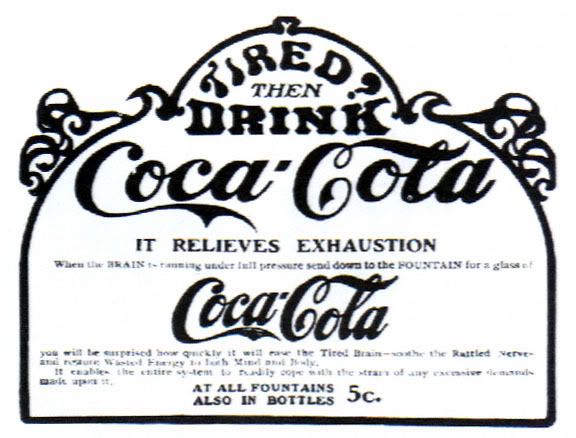
With this in mind, President Heber J. Grant in April 1922 General Conference asked the Saints as a personal favor to him not to drink Coca-Cola. Two years later, after meeting with representatives from the Coca-Cola company, he became convinced that the amount of caffeine in the beverage was harmless and stated that he would no longer speak out against the use of cola drinks. Many other General Authorities since that time have cautioned against caffeinated soft drinks. But they are generally very careful to note that these drinks are not specifically contrary to the Word of Wisdom, because there are just as many GA's who do partake!
I think it is interesting to analyze motivations for members who have decided it is important to abstain from caffeinated soft drinks. It is recognized that it is not specifically caffeine which is against the Word of Wisdom. So why are some members determined not to partake? Those who cite the health risks often consume foods such as jello with food dyes, soups with MSG, processed meats with nitrates or chocolate, which contains mood-altering and addictive substances. They are also apt to ignore the health benefits of eating more grains and fruits in season and limiting meats, which is suggested in the Word of Wisdom.
I often wonder if those members who eschew caffeinated soft drinks are using this relatively simple religious behavior as an identifier to signify their level of "Mormon-ness." Cutting out the Coke is an easy thing to do, and it immediately brands you as a committed LDS Church member.
On the flip side, what does that say about those of us who love our Diet Dr. Pepper? Do we enjoy flouting outward convention? Is it a "safe" way to be just a little bit rebellious?


Subscribe to:
Posts (Atom)


