She Said:
I grew up a PK (preacher's kid) which is similar to being the child of a Mormon Bishop, but for your whole life. I learned early what it was like to hang around the church for hours. Both Dr. B. and I love church meetings, and in our early years we thought nothing of going to two wards' full 3-hour schedule of meetings. But these days, the long hours are starting to wear on me. Am I getting a little ADHD in my old age? Or is it that I've heard it all before, and there is nothing new under the sun?
For many years rumors have circulated that church meetings were to be pared down to 2 hours. Usually the rumors have it that Sunday School would be the meeting to go, with members expected to provide scripture study in the home. I don't think these rumors will ever come to fruition, but I want to explore whether it would be a good thing to cut down on our Sunday services.
In today's fast-paced world, 2 hours is a long time to sit still and listen to a lecture-type format. It is especially difficult for families with children. Small children might be better served with a shorter, more varied program during the Primary time. A 30-minute classroom lesson, 15-20 minutes of singing, and a 5 or 10 minute Sharing Time message sounds like a perfect schedule for ages 3 to 11. This would also be less of a burden on all of the many members that it takes to keep a Primary fully staffed.
Adults might appreciate the format, too. One thing I miss about my Protestant upbringing was the coffee hour that followed our meetings. While I wouldn't necessarily suggest something similar for Mormons, I think that if our meetings were shorter, we might be chipper enough to socialize for a while afterwards, instead of rushing everyone home. For me, a big part of going to church is the fellowship, and even with our 3-hour blocks, we don't experience much of that, unless we're skipping our classes.
The biggest disadvantage I see to cutting out Sunday School would be less gospel study. But as it stands now, I think our Sunday School time is ineffective and boring. Any scriptural learning that takes place could easily be replaced by more emphasis in Sacrament Meetings on centering talks around scriptural topics, and a few additions to PH/RS. Perhaps special manuals could be prepared to assist families in setting up a Sunday School hour in their home. Many families would do a fine job at this, although I realize that for some it might take too much effort and fall by the wayside. I'd love to see small group scripture study classes during the week for those who are interested in coming together for discussion.
Do you see any other disadvantages to cutting our Sunday services by an hour?
He Said:
From time to time I hear that the Church is considering doing away with Sunday School so we as parents can better teach our kids the gospel. If it is anything like FHE that means we may or may not have more time for sleeping since FHE is a hit and miss proposition at my home. I think it will be sporadic for parents to actually use a manual and teach their kids as BiV suggests. I would probably try it out for a year or two or even five but it would probably be a very uneven treatment for my various kids. Over the course of several years the manual would get boring. I guess they could throw in the Preach My Gospel or some other manual to liven it up but for all intents and purposes they would need more than one manual because parents and kids would get bored. I suspect they would have us use the priesthood manuals which is way over kids heads just to save on correlation.
My oldest three children born during my youth experienced more concentrated gospel study which included three attempts at reading the Book of Mormon with one successful completion in an eighteen year period. I think a Sunday School manual might work for one or two cycles but for my eight children there would be gaps in their religious education. At least in a formal Sunday School class there is a week after week attempt to get them to engage with the gospel. Sometimes even when they are being obtuse the gospel seems to sink in. Between primary or young men or young women and sunday school with seminary my children have learned the gospel. I personally would hate to see it go for their sakes.
In my case the gospel doctrine class is a big snooze. I have to shut my mouth to keep from monopolizing the class. Nine times out of ten I know more than the teacher who many times preaches false doctrine or the gospel according to them. I have read most of the statements of the general authorities and can quote them til I'm blue in the face. Students and the teachers don't appreciate a know it all. I wish there were a beginner, intermediate, and advanced gospel doctrine class since one class doesn't fit all. I humble myself by sitting through these classes week after week. I always remember J. Rebuen Clark Jr. on his death bed saying he wants to remain faithful. To me getting through a gospel doctrine class for the fifth cycle is enduring to the end.
An interesting thing about the consolidated three hour block was it was supposed to free people up to do more Christian acts and do more gospel related things. However the only thing I noticed was that home teaching shifted in to the slot. Prior to that it was done mostly on week nights. Eventually it became an expectation that on the last Sunday of the month home teachers would want to come over. I resent my home teachers coming over on Sunday because it cuts in to my rest time and my occasional hymn singing. Every few months I like to sing out of pitch from the hymnbook and subject any child I don't see singing to having to sing with me.
I have visited a lot of LDS over the years and most of them seem to enjoy Sunday as a time for socializing with members. A few of the more stalwart invited us over for dinner a few times a year. Youth like to go to each others houses and hang out and end up eating with them occasionally so there is a lot of interaction during the primary and mutual years. In the last ten years I probably remember having a whole family over to our house for dinner or parties less than five or six times a year that leaves forty-five weeks for resting, remember on the seventh day even the Lord rested.
I personally like the earliest morning block so it can free me up to either do genealogy when I am in a quasi-righteous mood or to watch the Big Love, the Chicago Cubs game or the World Series of Poker when I am in a who cares mood. If there were a two hour block I might do the same amount of genealogy which runs in cycles. When my wife is in to it I am more gungho when she isn't I have a hard time now that my eyesight is diminishing. It is a back breaking tedious process to crank a microfilm reel or to even search on Ancestry or Family Search.
Mostly I just spend the time sleeping around eating lunch/dinner so I can be rejuvenated for the coming work week. Unfortunately I spend a lot of time taking my eight children to different firesides, bishop youth discussions or over to friends homes. The latter I try to not do and make the other kids in the ward come to our house. Once in a blue moon my son and I go home teaching to one of the three families. An extra hour means we could go earlier home teaching since we could get our nap in sooner or on the other three weeks I could watch more gospel movies or the Big Love which is tangentially LDS related. Don't worry, I change the channel if I think there is any sex happening to keep the Sabbath Day holy.
Take the Poll:
Showing posts with label church meetings. Show all posts
Showing posts with label church meetings. Show all posts
Friday, June 19, 2009

Saturday, June 6, 2009
She Said: How to Combat Chloroform
I hate to say this, but Church meetings are sometimes downright BORING. One Sunday I found myself staring at the clock on the wall, willing that big hand to move, and chewing my hair wondering if I could possibly sit in the room for one more minute.
I'm not quite sure how things have changed since my young adulthood in the Church, when I attended two ward's full meeting schedules and firesides, often for a total of 10 hours in Church on a Sunday. And I loved every minute of it.
Was it the rollicking fun of Relief Society, as we discussed mother education, cultural refinement, spiritual living and social relations, topics and lessons which had been selected and written by women for women? Was it the disregard of teachers for prepared lesson materials when they felt inspired to delve into the off-topic comments of interest to their students? Was it the class participation, the innovative sermons which were never expected to be based on General Conference talks?
Back then the jokes told about Gospel Doctrine class didn't revolve around "Sunday School answers," they invoked the amusing speculative comments in which the High Priests indulged. I'm afraid that by encouraging correlation and doctrinal conformity, we have only succeeded in boring our members to death. What can be done?
In a previous ward, I attempted to enliven Sunday School by heavily researching the topic to be discussed, then bringing up interesting and controversial points for which I was certain the teacher would not be prepared. This added a bit of amusement to my day. But I soon repented of my folly. Unfortunately now I find myself retreating into extra-curricular literature. A couple of weeks ago I went out to the car during a particularly boring lesson, and emerged with the only bit of reading material to be found: my 10-year-old daughter's novel on dragon magic. It got me through the rest of SS as well as a 5th-Sunday combined meeting on preparedness.
I haven't yet succumbed to texting, to games of tetris, or to surfing the internet on my iphone yet. But I have seen plenty of other members surreptitiously using these methods of entertainment to relieve their agony. I can't say I blame them, but I want to resist surrendering my expectation of powerful, interesting, affirming, spiritually motivating LDS meetings. What is to be done? Is my angst over this issue simply a function of my age and having been through the four-year cycle of Church curriculum one too many times?
Recently I read an ad campaign for the United Methodist Church which read: "What if church wasn’t just a building, but thousands of doors? Each of them opening to a different concept or experience of church. So that whoever knocks might find a journey to call their own. Would you come?" For some reason that paragraph reminded me of Joseph Smith. I like to imagine that each of his sermons opened the doors of thousands of possibilities for his listeners. He showed us a new way of looking at so many things. How can we reclaim that excitement of the early days of the Church, when there were tongues of fire in the Kirtland temple, handkerchiefs bringing healings, and thousands of people willing to die on the plains for a religion that had captured their souls?
What if Church was more like Dentyne??

What if Church was more like milk?

What if Church was more like Starbucks??
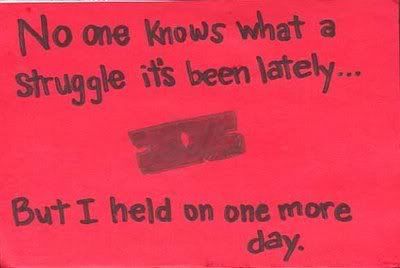
What if Church was more like PostSecret?


I'm not quite sure how things have changed since my young adulthood in the Church, when I attended two ward's full meeting schedules and firesides, often for a total of 10 hours in Church on a Sunday. And I loved every minute of it.
Was it the rollicking fun of Relief Society, as we discussed mother education, cultural refinement, spiritual living and social relations, topics and lessons which had been selected and written by women for women? Was it the disregard of teachers for prepared lesson materials when they felt inspired to delve into the off-topic comments of interest to their students? Was it the class participation, the innovative sermons which were never expected to be based on General Conference talks?
Back then the jokes told about Gospel Doctrine class didn't revolve around "Sunday School answers," they invoked the amusing speculative comments in which the High Priests indulged. I'm afraid that by encouraging correlation and doctrinal conformity, we have only succeeded in boring our members to death. What can be done?
In a previous ward, I attempted to enliven Sunday School by heavily researching the topic to be discussed, then bringing up interesting and controversial points for which I was certain the teacher would not be prepared. This added a bit of amusement to my day. But I soon repented of my folly. Unfortunately now I find myself retreating into extra-curricular literature. A couple of weeks ago I went out to the car during a particularly boring lesson, and emerged with the only bit of reading material to be found: my 10-year-old daughter's novel on dragon magic. It got me through the rest of SS as well as a 5th-Sunday combined meeting on preparedness.
I haven't yet succumbed to texting, to games of tetris, or to surfing the internet on my iphone yet. But I have seen plenty of other members surreptitiously using these methods of entertainment to relieve their agony. I can't say I blame them, but I want to resist surrendering my expectation of powerful, interesting, affirming, spiritually motivating LDS meetings. What is to be done? Is my angst over this issue simply a function of my age and having been through the four-year cycle of Church curriculum one too many times?
Recently I read an ad campaign for the United Methodist Church which read: "What if church wasn’t just a building, but thousands of doors? Each of them opening to a different concept or experience of church. So that whoever knocks might find a journey to call their own. Would you come?" For some reason that paragraph reminded me of Joseph Smith. I like to imagine that each of his sermons opened the doors of thousands of possibilities for his listeners. He showed us a new way of looking at so many things. How can we reclaim that excitement of the early days of the Church, when there were tongues of fire in the Kirtland temple, handkerchiefs bringing healings, and thousands of people willing to die on the plains for a religion that had captured their souls?
What if Church was more like Dentyne??

What if Church was more like milk?

What if Church was more like Starbucks??
What if Church was more like PostSecret?



He Said: How to Combat Chloroform
Recently my daughter and I discussed the concept of whether or not church is boring. Since she is a recently returned missionary she still glows with a missionary's zeal for the gospel. She said she really couldn't understand how anyone who was truly converted to the gospel could find the messages taught each week as being repetitive since every time she hears it she gains a fresh insight and renewed testimony of the truth of the gospel message.
She said she agreed with what a young Henry B. Eyring as a bored teen was told by his father when he wisely instructed him to become involved in the subject even when we think the speaker is boring:
"I finally got up enough courage to ask him what he thought of the meeting. He said it was wonderful... Like all good fathers, he must have read my mind, because he started to laugh. He said: 'Hal, let me tell you something. Since I was a very young man, I have taught myself to do something in a church meeting. When the speaker begins, I listen carefully and ask myself what it is he is trying to say. Then, once I think I know what he is trying to accomplish, I give myself a sermon on that subject.' He let that sink in for a moment as we walked along. Then with that special self-depreciating chuckle of his, he said, 'Hal, since then I have never been to a bad meeting'" (To Draw Closer to God [Desert Book: Salt Lake City, 1997], 23).
My daughter tells me the gospel is so filled with truth that every time she listens to the same topic over the teacher or speaker or students say things that she finds profound.
I have often heard in the church as an argument that only boring people get bored. A wise person once said "YOU are responsible for motivating yourself to find meaning and purpose in what you do. Life is not there to entertain you."
I have to admit that in my ward I am a member of the Sunday School presidency and that every now and then we get a teacher who doesn't really understand pedagogical variety and could use a stint in the Teacher Development course.
I find the manual Teaching No Greater Calling manual one of my most favorite ones since it has some great insights in to making the gospel relevant in our lives. If lessons are relevant than the Spirit is there and makes up for the deficiency of the teacher. Many times teachers follow in to monotonous patterns and need variety. Both the teacher and the students need to be engaged in the gospel discussion.
In the Teaching manual it emphasizes: "The gospel can likewise be presented in a number of different ways. No teacher should fall into a monotonous pattern of presenting the same kind of lesson week after week. When you use a variety of learning activities, learners tend to understand gospel principles better and retain more. A carefully selected method can make a principle clearer, more interesting, and more memorable." Like they say variety is the spice of life.
It also says:
In conclusion: Our mental attitude can really affect our participation in listening to a sermon or participating in a class. Teachers need to have the Spirit when teaching and students need to seek the Spirit when in class. The Spirit brings the gospel down into our heart like fire and drives boredom away.
She said she agreed with what a young Henry B. Eyring as a bored teen was told by his father when he wisely instructed him to become involved in the subject even when we think the speaker is boring:
"I finally got up enough courage to ask him what he thought of the meeting. He said it was wonderful... Like all good fathers, he must have read my mind, because he started to laugh. He said: 'Hal, let me tell you something. Since I was a very young man, I have taught myself to do something in a church meeting. When the speaker begins, I listen carefully and ask myself what it is he is trying to say. Then, once I think I know what he is trying to accomplish, I give myself a sermon on that subject.' He let that sink in for a moment as we walked along. Then with that special self-depreciating chuckle of his, he said, 'Hal, since then I have never been to a bad meeting'" (To Draw Closer to God [Desert Book: Salt Lake City, 1997], 23).
My daughter tells me the gospel is so filled with truth that every time she listens to the same topic over the teacher or speaker or students say things that she finds profound.
I have often heard in the church as an argument that only boring people get bored. A wise person once said "YOU are responsible for motivating yourself to find meaning and purpose in what you do. Life is not there to entertain you."
I have to admit that in my ward I am a member of the Sunday School presidency and that every now and then we get a teacher who doesn't really understand pedagogical variety and could use a stint in the Teacher Development course.
I find the manual Teaching No Greater Calling manual one of my most favorite ones since it has some great insights in to making the gospel relevant in our lives. If lessons are relevant than the Spirit is there and makes up for the deficiency of the teacher. Many times teachers follow in to monotonous patterns and need variety. Both the teacher and the students need to be engaged in the gospel discussion.
In the Teaching manual it emphasizes: "The gospel can likewise be presented in a number of different ways. No teacher should fall into a monotonous pattern of presenting the same kind of lesson week after week. When you use a variety of learning activities, learners tend to understand gospel principles better and retain more. A carefully selected method can make a principle clearer, more interesting, and more memorable." Like they say variety is the spice of life.
It also says:
Just as we need nourishing food to survive physically, we need the gospel of Jesus Christ to survive spiritually. Our souls are nourished by whatever speaks of Christ and leads us to Him, whether it is written in the scriptures, spoken by latter-day prophets, or taught by other humble servants of God. The Savior Himself said, “I am the bread of life: he that cometh to me shall never hunger; and he that believeth on me shall never thirst” (John 6:35).
Teaching that is nourishing to the soul uplifts others, builds their faith, and gives them confidence to meet life’s challenges. It motivates them to forsake sin and to come to Christ, call on His name, obey His commandments, and abide in His love (see D&C 93:1; John 15:10).
Many topics are interesting, important, and even relevant to life and yet not nourishing to the soul. It is not our commission to teach such topics. Instead, we are to edify others and teach them principles that pertain to the kingdom of God and the salvation of mankind.
Teaching that stimulates the intellect without speaking to the spirit cannot nourish. Nor can anything that raises doubts about the truth of the restored gospel or the need to commit ourselves to it with all our heart, might, mind, and strength.
Elder Bruce R. McConkie counseled: “Teach the doctrines of salvation; supply spiritual food; bear testimony of our Lord’s divine Sonship—anything short of such a course is unworthy of a true minister who has been called by revelation. Only when the Church is fed the bread of life are its members kept in paths of righteousness” (Doctrinal New Testament Commentary, 3 vols. [1966–73], 2:178).
In conclusion: Our mental attitude can really affect our participation in listening to a sermon or participating in a class. Teachers need to have the Spirit when teaching and students need to seek the Spirit when in class. The Spirit brings the gospel down into our heart like fire and drives boredom away.
Subscribe to:
Posts (Atom)


