Friday, June 26, 2009

He Said: A Menace To Society

In the LDS church which places a great deal of focus on getting married and having a family there are many single adults who never marry. Why they do not marry can be varied from they never had the opportunity to just being too picky.

One of my own daughters has been grappling with this phenomenon since she got home from her mission. She is a very attractive but very college-focused business student who is hardly a wallflower. She speaks her mind very openly and freely. She has gone on very few dates in her four years at BYU despite the fact she is a gorgeous girl with a superior mind and intellect. She is also beginning to get frustrated with her lack of dating and puts a great deal of pressure on herself due to her perceived lack of success to find an eternal mate. Her sister who is a year older came home from a mission and was engaged in less than five months and married at six months.

I personally did not marry until I was 28 years old so I understand the frustration of not getting married. When I came home from a mission at 22 I was eager to get married. I dated a considerable amount of young women at BYU. I dated a freshman girl who I was very serious with my entire first year. She had a missionary. Unfortunately for me she dumped me six weeks before he returned home and married him within two months of coming home. After that I didn't have any real opportunities until the age of 27.

My mission president encouraged us to get married within a few years after our missions. He told us that Brigham Young said that anyone over 24 was a menace to society. The blog Faith Promoting Rumors refutes this Mormon chestnut saying the closest anyone can come to a general authority statement is by George Q. Cannon. "a church apostle, [who] said in 1878: “I am firmly of the opinion that a large number of unmarried men, over the age of 24 years, is a dangerous element in any community.…”

The general LDS population does place credence in this statement I heard this told to me on numerous occasions. Until I was twenty-four I didn't feel a great deal of pressure to get married but after that age my roommates and friends began to pressure me. I was made to feel that I had some kind of deficit or flaw because I wasn't getting engaged. The more they pressured me the greater I began to get anxious. I made a lot of mistakes in my dating as a result of that constant nagging until about a year before I got married. First I dated the wrong demographic. I tended to date freshmen or sophomore women because they were young and pert and very attractive. I actually was too old for most of them and quite frankly most of what they wanted was flashiness which I did not have. They tended to like much better looking guys not guys with a hooked nose and a brash personality like mine.

I actually went out with many girls that were beauty pageant winners. It was like a game or competition between my roommates and me. This also caused me problems because many of them were pursued by guys that seemed on the surface to have more resources and there was no consistency in their availability. I didn't have a car until I was a senior when I was 25 years old so it was awkward in the winter to ask them to walk in the bitter cold to the Wilk. I remember I dated a young woman who graduated in accounting one summer. I had a 1959 Ford Fairlane with a 393 police interceptor engine that had a leak in the radiator and the seats had hard springs that poked you in the behind. The only attraction to the car was a drove and could squeal rubber which attracted more adventurous women but not an MBA type. She of course preferred a British fellow who was blond haired and blue eyed and drove an MG from our ward and dumped me. The only good thing was that many of these women intimated guys at BYU but the upper crusty. To my advantage many times I could call them 30 minutes before a BYU Cougars game and invite them out and they would go because many other guys made a bad assumption they already must have a date.

I was never very handsome nor sophisticated although I did have a very good self-image. In addition there were a few girls that were interested in me but I followed the unwritten rule of not poaching on women that my friends were interested in. The funny thing with these women was that I usually had a very good relationship because I wasn't trying that hard to impress them. However the guilt kept me from moving toward intimacy with them.

When I was twenty-seven I was working on a graduate degree and had a very unusual dream where I saw seven children with dark hair and features who I knew would be my children. That dream shook me up. I told a friend about the dream. My friend told me after sharing the dream that he tells his children that since I was single that Uncle F (me) would could come over and rock in a rocking chair and tell them stories since I was never going to have children of my own. I determined after the dream and the conversation to do something different in my dating life.

On further analysis I determined that from that point forward I would date women closer to my own age who were returned missionaries. I dated three women within a year all who were very determined in their approaches to life. The first woman was desperate to get married since she was about 24. She had appeared on my doorstep one night with another RM friend and had baked me a Zucchini bread in a can. I decided I would still proceed slowly in dating her. Some guy in our ward sensed her desire and invited her after a first date to go home with him for the weekend. Needless to say she came back engaged. I scratched my head because she came over to explain how she was now engaged. Not being one to hold back another I just smiled. I wasn't too broken hearted having suffered rejection for five years what was one more. I dated my wife and another woman simultaneously as we all chummed around together. I liked my wife's spunk and actually had a mini-vision to marry her despite the fact I knew the other woman wanted to marry me.

Since I grappled with the possibility of being a menace to society I have heard all of the arguments. It really is taught in the LDS church that if a male has the opportunity to get married and doesn't take it he will be a ministering angel in the celestial kingdom of Heaven.
For some reason LDS leaders are kinder to women since they suggest a woman doesn't do the asking.

In 2003 President Gordon B. Hinckley said to the unmarried sisters:

Some of you, unfortunately, will never marry in this life. That turns out to be the case sometimes. If that happens, do not spend your life grieving over it. The world still needs your talents. It needs your contribution. The Church needs your faith. It needs your strong, helping hand. Life is never a failure until we call it such. There are so many who need your helping hands, your loving smile, your tender thoughtfulness. I see so many capable, attractive, wonderful women whom romance has passed by. I do not understand it, but I know that in the plan of the Almighty, the eternal plan which we call God’s plan of happiness, there will be opportunity and reward for all who seek them.
I don't really understand the difference since it wasn't through not trying that no one married me until I was 28. I had a little green book that my wife looked through and counted every woman I dated from 22 to 28 at BYU. It totalled 113. Out of that number I feel there were five that I would have married had they really been interested in me. It is a miracle that I married my wife and a great miracle that I have been married 26 years later. If my wife had not married me would I have been confined to being a ministering angel in the life to come?

Recently I had a conversation with my wife about her possibly remarrying should I die since I have a few serious health problems. I suggested that there were many men out there who had not married or stayed married and she find one that had some money. I have had employees who have gotten divorced and met men on the Internet in chat rooms. One of them told me many men are high level professionals like accountants, book publishers, or techie types who work 70 or 80 hours a week and don't have time to socialize so I thought they would consider a woman even with four children at home. She referred to them as losers and said she didn't want to marry someone who had problems. Are men who can't marry or stay married really losers and menaces to society? Or is it just no one has given them a chance? There would be less menaces if people would give each other a chance and the Mormon culture put less pressure on the subject.

She Said: Solutions to the Menace of Unmarried Men

You have to wonder what makes these unmarried men an undesirable element, even a menace. I'm glad I saved Dr. B. from that fate.

Unmarried men represent 19 percent of all adults – some 37.6 million Americans -- and about 40 percent of all adult men in the nation. Among unmarried men, 67 percent have never been married, 23 percent are divorced, 6 percent are widowed, and 4 percent are separated. Only 5 percent of unmarried men have children under 18 living at home. Unmarried men are not as economically advantaged as their married counterparts. They have less health insurance, they are less likely to own their home, and they are not as likely to vote. They suffer from higher rates of loneliness and depression than unmarried women. They also have fewer ties to organized religion.

But we're going to have to get used to more unmarried men. In my research on this subject, I read an article called The China Syndrome, describing the upcoming social crisis faced by the Chinese due to their "one child only" limitation, the culture's traditional preference for boys, and legal abortion up to the ninth month.
"The one-child policy is 25 years old, so the first generation is just now reaching marriage age, and for China that's a big problem because it is estimated that as many as 40 million of its young men could spend their lives as bachelors."

In the U.S., one cause of the woman shortage is the declining birthrate. Because men tend to marry younger, a declining birthrate means there's a smaller pool of younger women than if the birthrate were steady. Other factors include 105 boy babies being born for every 100 girl babies, and older divorced men re-marrying younger never-married women.

Before we did this post, I didn't realize there were such decreasing opportunities for marriage among men. Mormons have traditionally interpreted Brigham's purported remark as meaning that men who would not marry were lessening the poor females' chances of finding connubial bliss. But not so in the 21st century!

More men than ever before want to get married and are unable to do so. As Dr. B. asks, should these men be penalized in the eternities when they did all they could but were unsuccessful in forming families in this life? Perhaps now is the time to reexamine Joseph Smith's views on polyandry. Joseph contracted polygamous marriage to nine women who were already married. Is this an answer to the marriage crunch of today?

Thursday, June 25, 2009

She Said: Unintended Consequences of Church Correlation

Formal organization of a Correlation Committee in the LDS Church occurred in 1908. At this time, the auxiliary organizations which had been independent and operated on a local level, were elevated to a general church level, under the direction of the First Presidency and the Quorum of the Twelve Apostles.

Further reorganization occurred during the early 1960s, and in 1972 the Correlation Department was extended to the planning, preparation, translation, printing, and distribution of church materials. The intent of correlation in the Church is as follows:

  • Maintaining purity of doctrine.

  • Emphasizing the importance of the family and the home.

  • Placing all the work of the Church under priesthood direction.

  • Establishing proper relationships among the organizations of the Church.

  • Achieving unity and order in the Church.

  • Ensuring simplicity of Church programs and materials.


Unfortunately, there were some perhaps unintended consequences of Church correlation which have occurred since the early '70's. Here are some of the things that I see as regrettable:

  • Curricula and policies which impose a mountain-states U.S. framework on the entire world and is not attuned to actual local circumstances.

  • Decreased autonomy in auxiliaries, especially for women. [1]

  • Gradual decline in creative endeavors in wards and stakes (musical performances, three act plays, hand work projects, welfare farm work, speech contests, instructional and recreational dances, road shows)

  • Suspicion and hostility toward publications not known to be "approved." (women's and auxiliary publications [2], private publications like Dialogue, Sunstone, and most of the books not published by Deseret; extending even to the Journal of Mormon History and BYU Studies).

  • Limiting of approved music to be performed in Church meetings, excluding classical sacred music as well as cultural and traditional pieces.

  • Loss of creativity, immediacy and interest in lessons and talks, art, architecture and music. [3]


It is comfortable for members in the continental U.S. to be able to visit anywhere in the world and be able to find their way around the church building. I have no doubt I could find the Relief Society room in any chapel in the world. Perhaps it is soothing for some to know that wherever they go, Mormons are hearing the same Sunday School lesson. But, as Claudia Bushman has said concerning correlation,
"I am not convinced that unity is as desirable as some seem to be. Unity requires much squelching of initiative."

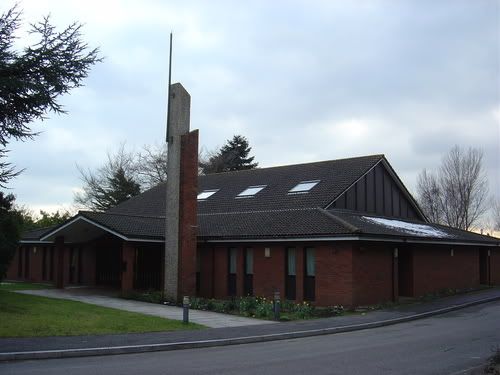
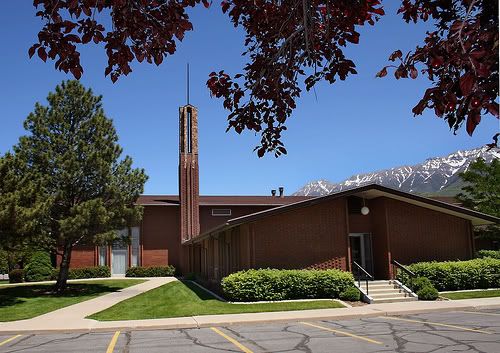
Are the advantages of a correlated Church worth having chapels which look like Kentucky Fried Chicken franchises? Are they worth being served a "Big Mac" Sunday School lesson?

____________________________________________

[1] "...curriculum reform paled in significance next to [Harold B. Lee's other goals of reining in the auxiliary organizations and placing day-to-day control of the church in the hands of the Twelve."

"[We] could see the auxiliaries running the Church, as it were. We had no Priesthood board but they had large and talented and powerful Mutual boards and Sunday School boards and Relief Society boards and Primary boards. And they scattered throughout the Church teaching their message, and they were talented people and taught so well that the auxiliaries of the Church were far more effective and powerful in the members idea and view than were the Priesthood quorums. So I would say, to characterize the Church prior to Correlation, that the auxiliaries ran it and everything took second place to them." (A. Theodore Tuttle from an interview of 1977 quoted in David O. McKay and the Rise of Modern Mormonism, by Gregory A Prince, Wm Robert Wright (2005) pp. 155, 143)

[2] see Empowerment and Mormon Women’s Publications by Vella Neil Evans, summarized in a post at FMH.

[3]

LDS Chapel in Orem, Utah


LDS Chapel in Bangnaa, Thailand


LDS Chapel in Mexico City, Mexico


LDS Chapel in Holdenhurst, U.K.

He Said: Church Correlation

When everything is said and done church correlation comes down to two things: doctrinal orthodoxy and money. In dealing with doctrinal orthodoxy a committee of the church made up of very conservative people usually Church Educational System employees that are trusted by the General Authorities approve and/or edit material that is disseminated to the various organizations or printed officially by the church under its publishing arms such as Deseret Book, BYU Press etc. Money is involved because the manuals are printed and so there is a factor involved in how many pages they are and how much does it cost to print them. I once overheard the conservation of a general authority while visiting the Church Administration Building with another general authority concerning the printing of a church manual, he was telling the vendor he was eating lunch with that by limiting the pages to under 200 that the church saves millions of dollars in cost.

For much of my lifetime Daniel Ludlow was in charge of the correlation department of the church. Back in the 1990s I submitted my manuscript of Prepare Ye the Way of the Lord: LDS General Authorities Speak on Missionary Work. The committee read over my manuscript and felt that doctrinally it was acceptable. However Sheri Dew at Deseret Book didn't want to go to the trouble of getting special approval to publish my work. At that time they discouraged any non-general authority from compiling a teachings book. The irony was that Clyde J. Williams a member of the BYU Religion department was able to publish several books without much trouble. So I have personal acquaintance with this department. I spoke to Dan Ludlow about my manuscript when he came to a Know Your Religion talk in El Centro, California where I was living. He suggested to me that I get a general authority to co-compile but I could never interest one in doing that. I finally got Intellectual Reserve to let me put it up on my blog since it was not for sale and a private compilation just for research purposes.

I frankly did not have a problem with this group and found Dan Ludlow to be helpful and honest in his comments. I don't have any trouble with correlation looking over material and suggesting possible inclusions and exclusions. I have worked with editors for many years in publishing in the Multicultural Review. Although I think the committee is a bit narrow in who is on it and could use a few more progressive scholars it does make sure to protect the church. However when you select people including CES types there is the problem of bias. What one considers to be sensational or questionable doctrine is very subjective.

I personally feel they should use the faculty at their church universities and go beyond more traditional CES people. Even though many of these professors might have one time been CES they are a little more connected to the research since many of their former students bring the stuff to their attention or generate it. I am not questioning that a few CES types occasionally are on the scholarly side I am just saying that in comparison most aren't cut out of the same cloth as the Richard Neitzel Holzapfel, the Bruce Van Ordens, or even the David Seeley. Although many of them get graduate degrees they aren't as rigorous as the ones who end up at the universities. I don't want to name the names of the ones I am thinking since kindness is better than blunt honesty. In addition they tend to be more insular in their approaches and more easily controllable. However their scholarship or lack of exposure to all the new stuff coming out actually is a detriment to their making informed decisions on content or eliminating new content. They didn't get to work in SLC in the CES by not being politically correct.

My best example is the new Joseph Smith Papers. I don't doubt that some of the CES types might peruse such works but it takes a person with a certain mentality to really analyze the implications and debunking of earlier stories. Correlation tends to whitewash and give a faith-promoting spin to history and doctrine. They look at different things like the perceived level that the general member is at.

It is kind of like when I was a school teacher in Tennessee. One day the assistant superintendent came to talk to me since my lowest level 5th graders had passed the highest class in reading. He told me that my fellow teachers were not happy that my students were doing as well as their students and that I was to slow them down and give them one day of writing out the definitions of the spelling words. The superintendent told me that I was to teach to the middle not to the top. Correlation assumes it knows what a member can handle that they need milk before the meat. Just like my students needed to not excell beyond the top group since they had been tested and assigned the lowest level members should not be given the mysteries of the kingdom. They need to stick to the basic principles of the gospel and correlation's job is to insure that.

Another important function that correlation provides is to make sure that the church is not embarrassed by any doctrines or stories that could hurt our advances in getting along with people in the outside world. They check to make sure that we don't cover negative aspects such as Mountain Meadows Massacre history or polygamy or blacks in the priesthood etc. Correlated history is more apologetic or revisionist in nature. A guy like Will Bagley writes an uncorrelated version while a guy like Richard Thorley writes a correlated version. Most authors who publish through Deseret Book have their material looked at by the correlation committee.

Personally I think correlation is a good process and anything they look at is closer to the what we as members should believe. I don't like the sensational stuff that a lot of times is subjective. Orson Scott Card said "history is a creative reconstruction of the past." In terms of history and some doctrine not everything said or written is totally accurate so correlation sanitizes it by getting a committee of trusted people together who can communicate with the general authorities and get their arbitration on what can be problemmatic.

It keeps imperfect authors from making mistakes that could hurt the church by revealing things that may or may not be true. I think writers don't always consider the implications of ripples that can be made if they clash with viewpoints, practices and doctrines that inspired men of God have already officially said or written. Correlation doesn't hide the truth it just disseminates it in the right time and the right setting.

Monday, June 22, 2009

He Said: Eating Meat Sparingly

I don't get too excited when I think about the topic of eating meat sparingly. I have always eaten great portions of meat my whole life. I figure you should enjoy yourself while on this earth. I have not really dieted at all any time in my life. However I have paid a price for my attitude. I don't have the will power or the self discipline to lose weight nor even the inclination. As far as the Word of Wisdom goes the only things I have done are not drink hot drinks nor used alcohol so I can get a temple recommend. I believe that there are a great many people like me in the church.

When the Word of Wisdom was given they had different food handling processes and meat was not kept for as long as today due to inferior refrigeration methods. I am sure that there might be some benefit to eating less meat since it tends to put on the pounds and causes many of the health problems that I experience today. Also eating undercooked meat can cause a variety of problems including death.

Worldwatch Institute reports that meat consumption is expected to grow 2 percent each year until 2015.
Meat production has increased by 500 percent since 1950. Today, most animals are raised on industrial “factory farms” that are displacing sustainable family farms. Thousands of animals are crowded in unsanitary conditions, spending their entire lives indoors without sunlight or pasture. To prevent disease from these inhumane practices, antibiotics are added to feed, contributing to the worldwide growth of antibiotic resistant bacteria.
Time Magazine reported 29 March 2009 in the growing case against red meat:
In more news that has steak lovers feeling deflated, a study published in this week's issue of the Archives of Internal Medicine finds that people who indulge in high amounts of red meat and processed meats, including steak, bacon, sausage and cold cuts, have an increased risk of death from cancer and heart disease. The findings add power to the growing push — by health officials, environmentalists and even some chefs — to cool America's love affair with meat.

The analysis of more than half a million Americans between the ages of 50 and 71 found that men in the highest quintile of red-meat consumption — those who ate about 5 oz. of red meat a day, roughly the equivalent of a small steak, according to lead author Rashmi Sinha — had a 31% higher risk of death over a 10-year period than men in the lowest-consumption quintile, who ate less than 1 oz. of red meat per day, or approximately three slices of corned beef. Men in the top fifth also had a 22% higher risk of dying of cancer and a 27% higher risk of dying of heart disease.
The number of overweight children has more than tripled over the past three decades also. It might have something to do with meat consumption. In 2008 on the subject of obesity the U.S. Surgeon General reported: "Today, more than 12.5 million children -- 17.1% of children and adolescents 2 to 19 years of age -- are overweight in the U.S., up from 13 % in 1999. Overweight children are at far greater risk for numerous health consequences, including cardiovascular disease, type 2 diabetes, and other chronic diseases. The most immediate consequence of overweight as perceived by the children themselves is social discrimination sometimes resulting in poor self-esteem and depression."

I have noticed this overweight tendency in my own children--many of them are pudgy if not downright fat. Our food consumption has contained a great deal of Burger King and McDonald's double cheeseburgers with the already meat-filled dinners we eat at home. Unfortunately by genetic predisposition we are all prone to diabetes with every person in my father's family suffering from it.

I wonder if it has anything to do with how they fatten up the animals. It is actually very inhuman how feedlots are in to packing in more and more animals and bulking them up with steroids and other growth hormones. I think that due to the chemicals young women are maturing earlier today. My seven daughters started menarche around the age of eleven or twelve. They exhibited other signs of puberty at an even earlier age. I believe the growth hormones in meat are contributing to this early maturation.

I think that Joseph Smith was on to something when he told us to eat meat sparingly. I like to eat it is one of the most enjoyable things I do above all other things. By the definition above I would be considered obese. I eat more meat than anything else in my meals which consists of spaghetti with meatballs, tacos, chili, fajitas to name a few.

In fact I have diverticulitis (perforation in bowel) due to my lack of eating high fiber. If I had eaten more green leafy vegetables I would have slowed down the problem which usually occurs after the age of 70 instead of getting it by 38. In addition due to my overweight condition I have high blood pressure and diabetes the very things that could also have been put off until later in life.

In addition meat can cause problems when improperly prepared. The two times in my life that I have almost died involved meat--both times I was food poisoned. On my mission I made chili and left it on the stove for a couple of hours before putting it away. I later ate it without heating it up enough. I ended up in the hospital with a fever over 105 which nearly fried my brain. A few years ago I went to a Rotary Club meeting where I gave a talk and ate some roast beef that was on the pink side. I again contracted food poisoning and had a blood pressure that was 180/123 with the high temperature again. I had to take Cipro in the end to kill it off. Many people have died during the past two decades due to E Coli, Salmonella and other bacterial infestations of meat.

There is another angle in eating meat that has not been explored much. That is carnivorism. It really is barbaric that we eat the flesh of other animals including in some cultures other humans. In the afterlife we are told that the lion will lie down with the lamb. Once when talking to Hugh Nibley he told me that he died on the table during an operation. He told me that when you die you are offered spiritual food. If you partake you must remain in the spirit world. I doubt that we will be offered meat in the next life. Nibley described it as delicious and very desirable this food. It seemed symbolic to me of the fruit that Adam and Eve partook of but in a spiritual form. The sense I got from Nibley was that it was like nectar. I sometimes lament if they will have a good steak in heaven. After all, Melvin J. Ballard tells us how hard it is to get over physical addictions in this world without our bodies. The majority of us will be craving hamburgers and hot dogs in the next life. Maybe Joseph Smith was right about the sparing eating of meat since there won't be as big of a craving in the world to come. But on the other hand Joseph Smith didn't completely abolish eating meat so maybe there will be appetizers in the next life too.

She Said: Seeking to be Great and Good and Wise

So.... with all of the health risks Dr. B. mentioned above, WHY is the "eating meat sparingly" portion of the Word of Wisdom ignored in the modern Church? It continues to be taught in our lessons and manuals, but there isn't much of an effort made to cut meat out of our diets. When we go to our temple recommend interview and are asked if we obey the Word of Wisdom, if we have taken as much as one sip of wine, we would feel constrained to answer in the negative. But the amounts of meat we have eaten does not even cross our minds. Is this because the word "sparingly" is not defined? Is it because, with modern refrigeration methods we don't think the meat restriction applies any more? Or is it just inconvenient in our fast-food world to structure a diet around grains and fresh fruits and vegetables?

I really find it so odd that today's Mormons have taken the Word of Wisdom so strictly with regards to "hot drinks" (redefined as coffee and tea), that they will often rid their diets of any trace of caffeine, including soft drinks, aspirin, etc. Yet when it comes to eating meat, there is little effort to follow the guidelines.

Two Sundays ago we had an investigator sitting with our family during Church and the congregation sang the song: "In Our Lovely Deseret:"
That the children may live long, and be beautiful and strong
Tea and Coffee and Tobacco they despise:
Drink no liquor, and they eat but a very little meat,
They are seeking to be good and great and wise.

I wondered, uncomfortably, what our investigator was thinking as we sang this hymn. I knew it was very different than what is sung in the worship services in other churches. Our health code is very important to us, but perhaps we don't want to seem TOO peculiar or different. How much does this have to do with how we interpret the Word of Wisdom? How strange would Mormons be if we didn't frequent McDonald's?

Dr. B. and I have been talking about this subject this week and in our menu plans we've cut down the amount of meat we'll be eating in the next 7 days. But we find that we still have difficulty not planning meals, especially dinner, around a meat dish.

Yesterday's stuffed mushrooms didn't go over very well.

Take the Poll: Meat and the Word of Wisdom


Friday, June 19, 2009

Shortening the Three Hour Meeting Block

She Said:

I grew up a PK (preacher's kid) which is similar to being the child of a Mormon Bishop, but for your whole life. I learned early what it was like to hang around the church for hours. Both Dr. B. and I love church meetings, and in our early years we thought nothing of going to two wards' full 3-hour schedule of meetings. But these days, the long hours are starting to wear on me. Am I getting a little ADHD in my old age? Or is it that I've heard it all before, and there is nothing new under the sun?

For many years rumors have circulated that church meetings were to be pared down to 2 hours. Usually the rumors have it that Sunday School would be the meeting to go, with members expected to provide scripture study in the home. I don't think these rumors will ever come to fruition, but I want to explore whether it would be a good thing to cut down on our Sunday services.

In today's fast-paced world, 2 hours is a long time to sit still and listen to a lecture-type format. It is especially difficult for families with children. Small children might be better served with a shorter, more varied program during the Primary time. A 30-minute classroom lesson, 15-20 minutes of singing, and a 5 or 10 minute Sharing Time message sounds like a perfect schedule for ages 3 to 11. This would also be less of a burden on all of the many members that it takes to keep a Primary fully staffed.

Adults might appreciate the format, too. One thing I miss about my Protestant upbringing was the coffee hour that followed our meetings. While I wouldn't necessarily suggest something similar for Mormons, I think that if our meetings were shorter, we might be chipper enough to socialize for a while afterwards, instead of rushing everyone home. For me, a big part of going to church is the fellowship, and even with our 3-hour blocks, we don't experience much of that, unless we're skipping our classes.

The biggest disadvantage I see to cutting out Sunday School would be less gospel study. But as it stands now, I think our Sunday School time is ineffective and boring. Any scriptural learning that takes place could easily be replaced by more emphasis in Sacrament Meetings on centering talks around scriptural topics, and a few additions to PH/RS. Perhaps special manuals could be prepared to assist families in setting up a Sunday School hour in their home. Many families would do a fine job at this, although I realize that for some it might take too much effort and fall by the wayside. I'd love to see small group scripture study classes during the week for those who are interested in coming together for discussion.

Do you see any other disadvantages to cutting our Sunday services by an hour?


He Said:

From time to time I hear that the Church is considering doing away with Sunday School so we as parents can better teach our kids the gospel. If it is anything like FHE that means we may or may not have more time for sleeping since FHE is a hit and miss proposition at my home. I think it will be sporadic for parents to actually use a manual and teach their kids as BiV suggests. I would probably try it out for a year or two or even five but it would probably be a very uneven treatment for my various kids. Over the course of several years the manual would get boring. I guess they could throw in the Preach My Gospel or some other manual to liven it up but for all intents and purposes they would need more than one manual because parents and kids would get bored. I suspect they would have us use the priesthood manuals which is way over kids heads just to save on correlation.

My oldest three children born during my youth experienced more concentrated gospel study which included three attempts at reading the Book of Mormon with one successful completion in an eighteen year period. I think a Sunday School manual might work for one or two cycles but for my eight children there would be gaps in their religious education. At least in a formal Sunday School class there is a week after week attempt to get them to engage with the gospel. Sometimes even when they are being obtuse the gospel seems to sink in. Between primary or young men or young women and sunday school with seminary my children have learned the gospel. I personally would hate to see it go for their sakes.

In my case the gospel doctrine class is a big snooze. I have to shut my mouth to keep from monopolizing the class. Nine times out of ten I know more than the teacher who many times preaches false doctrine or the gospel according to them. I have read most of the statements of the general authorities and can quote them til I'm blue in the face. Students and the teachers don't appreciate a know it all. I wish there were a beginner, intermediate, and advanced gospel doctrine class since one class doesn't fit all. I humble myself by sitting through these classes week after week. I always remember J. Rebuen Clark Jr. on his death bed saying he wants to remain faithful. To me getting through a gospel doctrine class for the fifth cycle is enduring to the end.

An interesting thing about the consolidated three hour block was it was supposed to free people up to do more Christian acts and do more gospel related things. However the only thing I noticed was that home teaching shifted in to the slot. Prior to that it was done mostly on week nights. Eventually it became an expectation that on the last Sunday of the month home teachers would want to come over. I resent my home teachers coming over on Sunday because it cuts in to my rest time and my occasional hymn singing. Every few months I like to sing out of pitch from the hymnbook and subject any child I don't see singing to having to sing with me.

I have visited a lot of LDS over the years and most of them seem to enjoy Sunday as a time for socializing with members. A few of the more stalwart invited us over for dinner a few times a year. Youth like to go to each others houses and hang out and end up eating with them occasionally so there is a lot of interaction during the primary and mutual years. In the last ten years I probably remember having a whole family over to our house for dinner or parties less than five or six times a year that leaves forty-five weeks for resting, remember on the seventh day even the Lord rested.

I personally like the earliest morning block so it can free me up to either do genealogy when I am in a quasi-righteous mood or to watch the Big Love, the Chicago Cubs game or the World Series of Poker when I am in a who cares mood. If there were a two hour block I might do the same amount of genealogy which runs in cycles. When my wife is in to it I am more gungho when she isn't I have a hard time now that my eyesight is diminishing. It is a back breaking tedious process to crank a microfilm reel or to even search on Ancestry or Family Search.

Mostly I just spend the time sleeping around eating lunch/dinner so I can be rejuvenated for the coming work week. Unfortunately I spend a lot of time taking my eight children to different firesides, bishop youth discussions or over to friends homes. The latter I try to not do and make the other kids in the ward come to our house. Once in a blue moon my son and I go home teaching to one of the three families. An extra hour means we could go earlier home teaching since we could get our nap in sooner or on the other three weeks I could watch more gospel movies or the Big Love which is tangentially LDS related. Don't worry, I change the channel if I think there is any sex happening to keep the Sabbath Day holy.


Take the Poll:


Thursday, June 18, 2009

He Said: Surgical Sterilization

A controversial subject that comes up for LDS is birth control and even more specifically the method of birth control. Today I thought it would be interesting to explore surgical sterilization. I don't have any person in mind including the case I cite. Since I have eight children people tend to talk to me very openly about birth control. It comes up in a variety ways usually just general conversation like how many children have you had. When I say I have eight children they look at me funny and make a joke or seriously talk to me about why did I have so many.

Since 1987 the LDS generally authorities have had a policy of staying out of a couple's bedroom I usually don't go in to the subject in any great detail and try to ignore it. But from time to time I still hear about it with members telling me to use some form of birth control and on occasional telling me specifically I can take care of it in fifteen minutes surgically.

I did a search on birth control and found out that the official position is:

Children are one of the greatest blessings in life, and their birth into loving and nurturing families is central to God’s purposes for humanity. When husband and wife are physically able, they have the privilege and responsibility to bring children into the world and to nurture them. The decision of how many children to have and when to have them is a private matter for the husband and wife.
In addition Church members are told not to judge one another. Even though birth control is a private matter it doesn't stop people from discussing it with me. Some people, on finding out I have eight children, question whether I can support them or send them to college or whether it is an environmentally or emotionally good. I assure most that none of them starve nor have they not gotten a college education nor even are in debt for school and that somehow we manage to get by and my children are no more screwed up than anyone else's. The majority make a joke including Mormons like didn't your parents ever teach you about birth control. Even LDS members wonder why I had so many children and make sure to tell me that less is better.

I have never practiced birth control other than abstinence (which should be obvious). Plus birth control in any form goes against my beliefs even if I weren't LDS. Even though I have my doubts about my worthiness for godhood somewhere in the back my mind the concept that God populates worlds without end and my wife's recent fundamentalist kick about plural marriage would suggest I can't populate worlds without the ability to have multiple kids in some fashion in the next life.

Over the years I have encountered a handful of people who have taken exception to the number of children that I have. Some have suggested that I should get a vasectomy since it is a minor outpatient procedure that is less invasive for a man than for a woman and only takes fifteen minutes. They even point out to me that should I remarry and have a younger wife that there is a good chance I could have it reversed.

A few years ago the subject of vasectomy came up with a close friend in a high priest Sunday meeting where he made a joke about being sterilized later we talked about it in greater detail. In He Said/She Said I wrote:
I think LDS bishops do a poor job disseminating information from the handbook. I once had a conversation with a friend who had been a counselor in a bishopric in one of my ward who had a vasectomy in which he had no clue what the church's position was. The man considered himself an ultraconservative Mormon. It came up when he jokingly told me when I mentioned my wife and I were having my sixth child that he wouldn't be worrying about that with his wife ever again since he now shot blanks. I looked at him and said you know that the LDS Church discourages that and it is in the Handbook of Instruction. He said he didn't have a copy and never read it even when he was in the bishopric.
I can't judge my friend too harshly since he did it out of consideration for his wife. He had no clue that he should even consult with his leaders nor that it was discouraged. I really do feel that it is between him and his wife and the Lord.

If I had to make that decision for myself I have wondered about the practice of surgical sterilization and whether I engaged in it would I put my eternal life in jeopardy. One of the core principals of Mormonism is to be a God or Goddess in the afterlife. We are told that if we are worthy that we will have sealed upon us the blessings of kingdoms, thrones, principalities, powers, dominions and exaltations, with all the blessings of Abraham, Isaac and Jacob and that we should be fruitful and multiply and replenish the earth so that we may have joy and rejoicing in the day of our Lord Jesus Christ. A person who is surgically sterilized chooses consciously not to have any progeny which is a part of Godhood.

Spencer W. Kimball in the October 1974 General Conference was a little harder than me:

We marry for eternity. We are serious about this. We become parents and bring wanted children into the world and rear and train them to righteousness.

We are aghast at the reports of young people going to surgery to limit their families and the reputed number of parents who encourage this vasectomy. Remember that the coming of the Lord approaches, and some difficult-to-answer questions will be asked by a divine Judge who will be hard to satisfy with silly explanations and rationalizations. He will judge justly, you may be sure.

To find out the church's official statement I look at the Encylopedia on Mormonism that listed the 1998 Handbook on Instructions statement on surgical sterilization and saw that there is more of an option than I thought. Also the 2006 Handbook also reiterated it word for word:
Surgical Sterilization (Including Vasectomy). "Surgical sterilization should only be considered (1) where medical conditions seriously jeopardize life or health, or (2) where birth defects or serious trauma have rendered a person mentally incompetent and not responsible for his or her actions. Such conditions must be determined by competent medical judgment and in accordance with law. Even then, the person or persons responsible for this decision should consult with each other and with their bishop (or branch president) and receive divine confirmation through prayer" (11-5).
So the policy has not changed in over twenty-five years. It appears that you can gain permission to do it if there are extenuating circumstances.

I am sure there are a some legitimate reasons to have surgical sterilization for women and men who have physical problems. I think for a man or a woman consciously choosing sterilization other than for medical conditions can be a dangerous practice in view of the Mormon concept of eternal procreation. I understand it is less invasive for men but the thing that bothers me about it is that it seems hypocritical to think you can be a God creating worlds when you choose in this world to fix the procreative power to circumvent having children. What will change your desire in the next life to all of a sudden decide to have millions of them like the sands of the sea and populate worlds without end.

She Said: Surgical Sterilization

Well, let's see.

If speculation is the order of the day, I will venture into this subject. If we are restored to our perfect form in the afterlife, surely any surgeries of this type will be negated. However, it makes sense to me that someone who has decided so strongly that they don't want any more children that they are willing to undergo such an invasive procedure to stop them from coming may find that they have made an eternal decision. Because I have many moments when I fear this may be so, I wouldn't consider such an option for myself or for DH.

If we are getting personal, I will agree that for the first 14 years of our married life I was content to let children arrive when they might. But after 8 children and when I reached my 40th birthday, it was time to reconsider. Though the birth control we use now is not a surgical, chemical, or barrier form, it is birth control nonetheless. It is calculated to stop children from coming into our family. What makes this so very different on an eternal level than some of the other types?

One more admission: I think I burned myself out here in this earth life with my paltry 8 children. I can't imagine having millions of spirit children in the eternal realms, no matter how perfect my body is or how easy pregnancy and childbirth might be then. I loved bearing my children, nursing them and raising them. But an eternity as a mother of spirit children doesn't fill me with longing bliss--it rather makes me tired. I don't think I'd be very good at it, and as a motivator for living worthy to gain an exaltation, it isn't quite up to snuff. I've said before, give me a harp and a cloud and just put me in the choir.

Tuesday, June 16, 2009

She Said: Adoption

The LDS Church believes that every effort should be made to assist young women who conceive out of wedlock to first try to establish an eternal family relationship. If the unwed parents are unable or unwilling to marry, they are then encouraged to place the child for adoption, preferably through LDS Family Services.

The Church stresses that unwed parents who do not marry should not be urged to keep the infant as a condition of repentance or out of some desire to care for one's own. They consider that the best interests of the child in this situation is to be placed for adoption. The Proclamation on the Family states:
Children are entitled to birth within the bonds of matrimony, and to be reared by a father and a mother who honor marital vows with complete fidelity.

The wording of this sentence makes me uneasy and raises a few doctrinal questions. If children are "entitled" to birth within just such a traditional family, then why does God permit them to come to earth in such varied circumstances as they do? I presume he has control over where the spirits are sent, over men's and women's fertility, and such. I am tempted to believe that when a child is sent to a certain mother that she is "entitled" to raise it as her own.

Since I now have 6 girls who could potentially bear children, this is a topic of concern to me. I would be devastated if a child who was born into our family was given up for adoption. I would be willing to provide any support needed for such a child to remain in the family. I am also concerned that because of the Church's policy, LDS Social Services is not providing much needed information and support so that young women can make informed decisions. Michelle Renaud provides one example involving Don Staheli, who worked for LDS Family Services and now is Regional Representative of the Twelve.

The LDS Family Services site "It's About Love" shows how heavily slanted this organization is toward convincing a young woman to give her child up for adoption. The many options are explored with a purpose of convincing the pregnant woman that the best and most moral choice is adoption.

I have seen a great change in this policy just in the course of my lifetime. When I first joined the Church, the counsel to young women was that they should keep and raise their children. It often was suggested to them that this would be part of the repentance process. I don't feel that this policy, any more than the current one, is perfect for every situation. I feel that the families involved should be counseled on their options and encouraged to pray and make their own decisions based on their desires and family resources. Since the preferred counsel has changed so much over the years, I feel satisfied in declaring that giving up children for adoption is merely a policy currently preferred by Church agencies which may change and is not doctrinal. I don't think that anyone can make a blanket statement that certain types of families or individuals are any less able to successfully raise children than the traditional, two-parent, husband and wife pair.

What do you think?

He Said: Adoption

I first became of LDS Social Services and their work of adoption when I worked for Reed Benson, the son of Erza Taft Benson, back in 1985. He and his wife May were not able to have children and adopted nine children through them. They were able to get brand new babies from unwed LDS mothers right at birth. I was very impressed with the family life that he provided for his children which included FHEs at Utah Jazz games and snazzy family accommodations which included workout rooms. He spent around $5,000 a year on FHE alone. He was a great dad who took care of his kids.

The Encyclopedia of Mormonism says that the priorities of the LDS Social Services are:

1. Placement of children for adoption with couples who meet legal requirements and the Church's personal worthiness standards.

2. Counseling and support for unwed parents, to help them with issues and decisions pertaining to marriage, adoption, and single parenthood.

3. Placement of children in foster homes that will promote healthy individual development and positive family relationships.

4. Therapy and referrals for members having personal or family problems, to allow them to receive help from resources that are respectful of LDS values.

I think it is a wonderful thing that the church does in providing placement of LDS babies by unwed mothers in LDS homes. I know of many LDS couples who for various reasons were not able to have children and were able to adopt through our own agency.

Monte J. Brough of the Seventy back in 1994 explains the Church's position clearly:

The Church has put people and programs in place to help unwed parents repent of their sin and build futures for themselves and their baby.

When a couple conceives a child outside of marriage, the consequence of that sexual relationship affects many people. These consequences can be very difficult and, in many cases, become a lifelong impairment to happiness and freedom.

I shall never forget the experience of sitting at the side of a hospital bed with a young member of my ward. This young unmarried woman had just given birth to a baby boy, and she faced some very difficult questions. As her bishop, I had been asked to visit with the family.

Well-meaning but mostly uninformed friends and family members were showering her with conflicting and confusing advice. They used implications of guilt and responsibility to support unwise and impractical solutions to the young woman’s situation. It seemed that each adviser was able to recall specific examples to support his or her advice. Most, it seemed to me, had motives of their own which were not properly focused on the two most important questions: What was best for the baby, and what was best for the young woman?

The young woman wept as she faced the decisions which she must make, and then, as never before, she wanted the advice and assistance of her bishop. She had no desire to seek her own self-interest as she contemplated the magnitude of her problems. Over the next two days, we talked a great deal about these questions, during which time I provided her with as much information as I could. We both knew that in this case, as with everything else, the best information would come from those we sustain as prophets of the Lord.

On 1 February 1994 the First Presidency wrote a general letter on this very important subject. The letter reads, in part, as follows: “Priesthood and auxiliary leaders are again encouraged to renew their efforts to teach ward and stake members the importance of living chaste and virtuous lives. We note with alarm the continued decline of moral values in society and the resultant number of children being reared by unwed parents. … Every effort should be made in helping those who conceive out of wedlock to establish an eternal family relationship. When the unwed parents are unable or unwilling to marry, they should be encouraged to place the child for adoption, preferably through LDS Social Services. … Unwed parents who do not marry should not be counseled to keep the infant as a condition of repentance or out of an obligation to care for one’s own. … When deciding to place the baby for adoption, the best interests of the child should be the paramount consideration.”

I have often thought about what I would do if one of my seven daughters became pregnant out of wedlock. Initially I have thought that I would raise it as my own child but at 54 with high blood pressure and diabetes I wonder how long of the child's life I would be there for. Both my parent died by the time they were 74. My father's father died at 54 and his mother at 66. The question I have is how long will I be around to raise a baby.

I came across an interesting article For What is Best for the Baby in the July 1999 Ensign where one parent faced the same thing and was torn feeling like they should also raise the baby but in the end left it up to their thirteen year old daughter to decide. In the end she choose the parents for her own baby and the family gave the baby up for adoption.

Even though the church supports giving up the baby for adoption I know of a few families that raised the baby as one of their own children. In one case that my daughter is familiar with and told me privately the boy didn't know that he was adopted until high school when he became suspicious that the gap between him and another sibling was very close.

I think if a parent is going to raise their child's baby they should be upfront and honest with the child. It is difficult enough to find out about it but it causes a great deal of psychological baggage when in a culture where you have to say you are honest in your dealings with your fellow man that you are lying to a child that you are raising up to follow similar standards.

In my own family even though we were Catholics my sister was married at fifteen to a seventeen year old boy after she became pregnant. My father tried to force her to have an abortion. Instead she ran off with the boy and today she is still married to him thirty-six years later. I never thought she would stay married all these years but she did. In the case where marriage is a possibility I am in favor of marriage. But when a boy won't take responsibility I feel that adoption is the best option.

Monday, June 15, 2009

He Said: Helen Radkey the Baptism for the Dead Nark


Helen Radkey questions the practice of LDS members doing vicarious baptisms for the dead for nonfamily members. She holds the LDS Church responsible for its members doing the work for whoever they feel like and likes to stir the pot. Radkey was briefly a Mormon and a former Catholic but today is a spiritualist minister who works in a bookstore and has read tarot cards for a living. She also is a professional genealogist who checks the IGI for what she considers breaches of genealogical etiquette. She is very good at what she does so I personally would use her if I needed some IGI work done and could afford her $18 per hour rate.

The Church's spokesperson Scott Trotter says that it is not the policy of the church to do work for people who are not direct descendants and work done is not encouraged by the Church Leaders. The LDS Church official policy is that "Church members are specifically instructed not to submit the names of persons not related to them. Before performing temple baptisms for a deceased family member born within the last 95 years, members are instructed to get permission from the person's closest living relative."

This last few weeks I have learned about several infractions that Helen Radkey claims she exposed about unauthorized baptisms during the past several years. About a month ago the news had several stories about the Obama's mother being baptized. Barak Obama's mother Stanley Ann Dunham was baptized by a zealous church member who felt like doing her work but wasn't a direct relation. I also heard about a buzz on the Fundamentalist listservs a few weeks ago that is frequented by my wife about the baptisms of Ervil LeBaron, Rulon Jeffs and a bunch of other independent and FLDS polygamous leaders. Also in April 2008 the Catholic Church came up with a directive that LDS were not to access parish records nor microfilm them. Supposedly they baptized Pope John Paul II. Also fourteen years ago in 1995 Jewish leaders questioned the Church's practice of baptizing Holocaust victims.

According to Helen Radkey she was behind all of these other churches and groups finding out about LDS members baptizing these people for the dead. One of her main mission's in life is to nark out the church and its members when she finds such infractions. Radkey has become the ultimate IGI identifier of people she doesn't feel should be baptized. Even tries to make a buck or two on her findings.

Religion News Net confirmed that the fundamentalists being baptized was outed by Radkey:

Prominent fundamentalist Mormons, most of whom were excommunicated by The Church of Jesus Christ of Latter-day Saints for practicing polygamy while they were alive, have been posthumously re-baptized in LDS temples, a Salt Lake City researcher says.

Helen Radkey said in a new report that she obtained church records on 20 fundamentalists — from murderer Ervil LeBaron to Joseph Musser to Rulon Jeffs — showing that they’ve been baptized and have had their plural marriages “sealed” for time and eternity by proxy LDS members, one as recently as this year.

In Forward in 2002 we read about Radkey's efforts:

Helen Radkey, an Australian-born genealogical researcher, minister in the independent Universal Life Church and tarot card reader, has been a Catholic and a Mormon — but what she really wants to be is a Jew.

"If I was going to be part of an organized religion, it would be Judaism, but the rabbis here don't want me," she said in an interview with the Forward from her home in Salt Lake City.

This may be an overstatement, but the 60-year-old Radkey has acquired something of a reputation for being a thorn in the side of religious institutions. She is perhaps best known for prodding The Church of Jesus Christ of Latter-day Saints — known less formally as the Mormon Church or LDS — to stop church members from using the Mormons' extensive genealogical records to baptize posthumously thousands of Jews, including Holocaust survivors.

According to the Pensito Review Radkey is concerned that other famous or infamous people having their vicarious temple work done including: Ted Bundy, Adolph Hitler, Eva Braun, Martin Bormann, Benito Mussolini, Josef Stalin, Mao Tse-Tung, Al Capone, Bonnie and Clyde and Benjamin “Bugsy” Siegel, who was also Jewish to name a few who had their work done.

The Ancestry Insider finds that Radkey likes to rile up religions against each other and is no respector of religions even though she likes to pick on the Mormons.

Radkey has pitted the Church against Jewish groups. In September of 2002 Radkey asked the Church to pay $30,000 plus continued payments if she would give them a list of Jewish names she had uncovered in the IGI. The Church declined. (Forward) Later that year, Ernest Michel met with the Church armed with a report prepared for him by Radkey. (CNN)

Throughout the contradictions, Radkey's self description remains true: "provocative and controversial."

I don't see what the big deal is for Radkey. She is just trying to incite other religions to be angry about doing work for their dead. She certainly doesn't understand much about our directive to do the work for everyone that has ever lived on the earth.

On 6 May 2009 Scott Taylor in the The Deseret News reported:

The LDS Church has counseled its members to request temple baptism and other temple ordinance work only on behalf of their relatives, but it recognizes that sometimes well-meaning members bypass the instruction and submit the names of non-relatives.

The church also recognizes that due to pranks or carelessness, names of famous or infamous individuals or even fictitious names are sometimes submitted for temple work -- all contrary to policy and often resulting in pain and embarrassment.

With millions of members providing names for proxy work worldwide, the church acknowledges the difficulty in preventing such incidents and often learns of them after the fact.

On LDS.org we read the Church's statement about such baptisms:

Some people have misunderstood that when baptisms for the dead are performed, deceased persons are baptized into the Church against their will. This is not the case. Each individual has agency, or the right to choose. The validity of a baptism for the dead depends on the deceased person accepting it and choosing to accept and follow the Savior while residing in the spirit world. The names of deceased persons are not added to the membership records of the Church.
In the Encyclopedia of Mormonism H. David Burton gives us a different slant on how baptisms for the dead are conducted today:
In the early years of the Church, proxy baptisms were performed only for direct blood ancestors, usually no more than four generations back. Today, Latter-day Saints are baptized not only for their own forebears but also for other persons, unrelated to them, identified through the name extraction program. The practice reflects the yearning of children for their parents and of parents for their children, and charitable feelings for others as well, that they receive the fulness of the blessings of the gospel of Jesus Christ. In LDS perspective, whatever else one may do to mourn, give honorable burial to, cherish, or memorialize the dead, this divinely authorized ordinance of baptism is a demonstration of love and has eternal implications.
In my opinion there isn't much that the church can do about members who decide to do work for those otherside their families. In 1983 I encountered this situation as a student of Hugh Nibley. One of Nibley's heroes was Julius Cesar Scalinger. Nibley told me that he was interested in doing the temple work for Scalinger who was a contemporary of Erastus of Rotterdam. Scalinger apparently mastered every known language in the world and Nibley said he and Erastus were his own inspirations for learning languages. He asked me to go to the Harold B. Lee Library and find Scalinger's genealogical information so he could do his work. The only complete entry I could find that I gave Nibley was from a French Encyclopedia that gave his birth, marriage and death. I never followed up on whether or not Nibley did the work but I suspect he and others did work for people not related.

I never questioned Nibley nor his desire to do work for noble people who lived on the earth. I personally have never done work for someone that isn't related to my family in some way. But even Wilford Woodruff did the work for the signers of the Constitution and the Declaration of Independence. A person who is vicariously baptized can accept or reject their baptism. Since it is a concept of the LDS Church that everyone needs baptism I don't understand what the problem is with Radkey or others.

She Said: Baptism for the Dead

FYI, Dr. B.--I looked on the IGI and the temple work for Julius Scaliger was done in Provo in 1993--so Hugh Nibley could very well have done these ordinances for his hero.


I enjoyed reading Dr. B.'s article on Helen Radke and the LDS practice of Baptism for the Dead. Because I am LDS, I see quite clearly the rationale behind the desire of members of the Church not only to provide ordinances for their own deceased relatives, but for everyone who has lived on the earth. I do sympathize with non-members who have requested that we refrain from associating their family members with our Church, but I have to confess that I have no strong feelings on this issue. It seems to me that if someone does not believe in the Mormon Church, these actions might easily be dismissed. If someone baptized my grandmother into the Church of the Flying Spaghetti Monster, I would scarcely take notice, other than to laugh. But I have no wish to offend. If the following joke makes you cringe, then you will probably be able to appreciate, better than I, the affront that non-members take at our practice of vicarious baptism:
"I cannot condemn the Mormons’ posthumous baptisms, because I myself have been tasked by God Herself to baptize dead Mormons into my church and then bless them with posthumous plural interracial gay marriages. In fact, here comes another marriage right now…

*blink*

Ladies and Gentlemen, I present to Mr. Joseph Smith, Mr. Brigham Young, Mr. Idi Amin, and Mr. Pol Pot. What God has joined together let no man put asunder!"

The Church's current policy attempts to straddle that fine line between avoiding offense to others and following religious dictates of our own. Publicly the Church tells members to submit only their own family names to the temple, but because there is no formal restriction on names that are submitted, in practice anyone can submit any name they would like.[1] With the new family search program, a member can clear names for temple work on their own home computer. Though the program warns the member to check for duplicates, or to have certain names cleared, members can choose to override these cautions and submit the name nonetheless. The names are printed out on a sheet of paper and taken to a desk at the temple, where it is a mere formality to prepare the pink or blue name slips which will allow the ordinances to be completed.[2]

Even with the attention that Helen Radke and others have brought to this practice, I see no change contemplated for the procedure of submitting names to the temple. And other religions are becoming increasingly aware of this. In response, the Catholic Church has instructed parish priests to discontinue the microfilming of parish registers by the LDS. This was freely allowed in the past. And Jewish leaders have issued statements protesting the "wrongful practice of baptizing the Jewish dead," noting their reasons that they believe it is disrespectful and harmful.

There will likely be continued tension between those who feel that the receipt of LDS ordinances is vital to the salvation of all mankind, and those who are offended by the suggestion that their family members' chosen religion or lack of religion was not good enough.


_____________________________________________
[1] Church policy states: "Please do not submit the names of deceased celebrities and historical personalities, including those of royal or noble lineage or early LDS Church leaders and their families, or of persons born in European countries prior to A.D. 1500, regardless of your relationship to them. Though the names may not yet appear on the Ordinance Index, temple work for most of the people in these categories has already been done. Sometimes when we study about such people, we feel a spiritual affinity to them, but we should not submit their names for temple work. If names are sent in counter to this policy, they must be cleared by the Temple Department. The Medieval Family Unit (1-800-346-6044) can help you avoid duplicating ordinances for those born before A.D. 1500."

[2] Because the formal "clearance" by higher Church authorities is not always sought before the name is presented at the temple, individuals such as Adolph Hitler and Ervil LeBaron have been baptized posthumously. It does not follow that a General Authority approved of the ordinance.

Take the Poll: Baptisms for the Dead


Saturday, June 13, 2009

Follow Up: Supporting Evidence for the King James Version

King James Version Bible Song


The Horrible Dangers of Using the NIV

Follow Up: The KJV vs. the NIV

Friday, June 12, 2009

She Said: Excommunication

I'm going to make this short and sweet.

In the scriptures the Lord has said that he will cut off those who do not keep the commandments. He has also said that He is our judge and our lawgiver. When humankind are given the ability to judge, it is for the purpose of knowing good from evil (see Moroni 7). We are told:
...seeing that ye know the light by which ye may judge, which light is the light of Christ, see that ye do not judge wrongfully; for with that same judgment which ye judge ye shall also be judged.
If our leaders want to hold "courts of love," they should be places where the concerns of both parties are laid on the table. Discussions can be held, compromises can be made, help can be extended, I'd say even warnings could be given. I like to think of a Bishop as a judge in Israel in the sense that Moses put it in Exodus 18:
When they have a matter, they come unto me; and I judge between one and another, and I do make them know the statutes of God, and his laws.

But as for excommunication--as for punishment--cutting someone off from God and the fellowship of believers--

I say we leave that to the Lord and to the individual themselves.

He Said: Excommunication

The most dread word that any Latter-day Saint fears is excommunication. Most Latter-day Saints hope that they will one day dwell in the celestial kingdom with Christ and our Heavenly Father and Heavenly Mother so being excommunicated is tantamount to a Mormon as the ultimate punishment since an excommunicated person will no longer be considered part of the church or body of believers and will be cut off from God. Damnation means not being in the presence of God and excommunication is the church's way of saying that you are cut out of the Lamb's Book of Life.

The Church says that the process is a court of love. I questioned that for many years until I was involved at the stake level in receiving a person back in to the fold in 2005. Some members believe that it is only between the Lord and the person and that the church should not get involved. I feel that the church can exert an influence in helping a person to repent and return to the fold. Ultimately it requires inspired judgment in order to determine the status of a person. In LDS belief there is a series of judgments which lead up to the final judgment and that the Lord will consider in making his final determination. I also think that the church does need to protect itself from unscrupulous members who could bring about damage and lead others away from the church for apostasy.

Acccording to Wikipedia excommunication is a penalty "for those who commit serious sins or for those that significantly impair the name or moral influence of the church."

According to the Church Handbook of Instructions, The purposes of church discipline are (1) to save the souls of transgressors, (2) to protect the innocent, and (3) to safeguard the purity, integrity, and good name of the church. Excommunication is generally reserved for what are seen as the most serious sins, including committing serious crimes; committing adultery, polygamy, or homosexual conduct; apostasy, teaching false doctrines, or openly criticizing LDS leaders. A 2006 revision to the Church Handbook of Instructions states that joining another church is also an excommunicable offense, however merely attending another church does not constitute apostasy.

Excommunication for a Melchizedek Priesthood holder (all adult males over eighteen who are living LDS standards are usually ordained to the priesthood) must be done at the stake level. The stake presidency (made up of a stake president, two counselors, a stake clerk, and an executive secretary) and High Council act as a disciplinary council like a court. The High Council is made up of twelve members who act as the defense and prosecution. Six speak for the person and six speak against the person. The person committing the offense is excused to the hallway to await the decision. After hearing all the testimony the stake presidency then return to his office and consult in private. The stake president then invited the smaller group to pray and then comes to a decision on what discipline to impose. He then tells the small group his decision and they return to the high council room where the stake president announces the decision to the combined group. The person being disciplined is asked to come back in and told the final outcome and a few words of counsel on the appeals process and the conditions of their discipline and a some words on how to return to full fellowship later. If the person is not present a letter is sent to them informing him of the decision of the stake president. A person can appeal to the First Presidency in Salt Lake City.

Females and adolescent males or adult Aaronic priesthood males are disciplined by the bishop and his two counselors with the bishop making the final determination. The decision can be appealed to the stake president and the First Presidency.

When a person is excommunicated they can still attend church but they can't partake of the sacrament, hold a calling, pay tithing nor attend the LDS temple. An endowed member needs clearance from the leaders in Salt Lake City before they are allowed to have their blessings restored. The matter is kept private today without other members being told so not to embarrass the person nor his/her family. When I first joined the church it was announced publicly. An excommunicated person can ask for reinstatement after one year. Depending on the severity of the sin it may take several years and requires them to follow a plan for correcting their behavior.

I attended a disciplinary council when I was an executive secretary in a stake. The man had committed some grievous sexual sin which included adultery. He had been excommunicated. He worked with his bishop in overcoming his sexual addictions which included pornography. After about a year and a half with the recommendation of his bishop the First Presidency agreed he could be reconsidered for reinstatement. The stake president told us the decision to reinstate was approved by Salt Lake City and we could proceed if everyone was in agreement. We meet as a stake presidency with the High Council and heard the person's statement and the bishop's statement that he had counseled with him and felt him ready to be reinstated to full fellowship. A few High Council members spoke for the man and a one or two spoke about what had caused the problem in the first place but not too adamantly. We as a stake presidency then left the room and had a short discussion on whether the person was ready to be received in full fellowship again. All five members of the stake presidency gave their views. We prayed as a group. The stake president then pronounced that he felt the Holy Spirit and felt we should accept the person in full fellowship. We returned to the room and the stake president told the high council that he felt the person should be welcomed back in full fellowship.

The person was invited in to the room again. The stake president told him how proud he was of the person and their desire to live the gospel and correct his behavior and that the group felt that the person should be received in full fellowship. Every person in the room shook the person's hand and a few embraced the person warmly welcoming the person back in to the full fellowship of the church. I wasn't involved in the restoration of blessings or any of those details since the stake president handled that part personally between him, the person and Salt Lake City. We were only involved in the process of welcoming him back.

I can't to this day remember who the person is but I do know that the person involved felt dignity and compassion and love in the process. It was a very moving experience for me to welcome the person back in to full fellowship and to see his joy in coming back. On that day I discovered that when handled the way the church outlines that it was indeed a council of love.

Take the Poll: Excommunication


Thursday, June 11, 2009

He Said: Retreats and Symposia

During the course of the past ten years I have grappled with the fact that despite my discouragement my wife Bored in Vernal has chosen to associate herself with some pretty ultra-liberal symposia which includes Counterpoint, Rosewood Retreat, and Sunstone Symposium. It isn't that I am anti-intellectual that I don't like her going it is because in terms of faithfulness they have had a decided affect on her formerly orthodox beliefs in the teachings of the Church.

When I first courted and married BiV I had recruited her as a fresh returned sister missionary in my BYU student ward to help me extract quotes voluntarily from talks by Spencer W. Kimball in to a compilation by Yoshihiko Kikuchi on Proclaiming the Gospel: Spencer W. Kimball Speaks on Missionary Work. When I first met her she was far from the bleeding-heart liberal she is today. Then she was an ultraconservative who didn't believe in worldly music, television, or doctrinal theories. Her idea of a great time was going to the Sperry Symposium and she looked forward to attending BYU Education Week.

During this time early in my married life I was working for Richard O. Cowan in the BYU Religion Department. I attended many Church-supported seminars including the Mormon History Association, the Sperry Symposium, and the CES firesides. Brother Cowan was personally involved in all the accepted LDS symposium, forums, and associations and I went to help him whenever he gave a presentation. A couple of times later in my life I was a respondent to his papers.

I personally met Elder Boyd K. Packer a couple of times while working for Brother Cowan who encouraged me to emulate my boss who he said was "a trusted historian" and that he heard good things about me and that I was also trusted. Being as Elder Packer was one of my heroes I wanted to follow his advice since I know there is safety in staying close to the leaders' guidance. Elder Packer during the time I was a student at BYU for seven years discouraged members of the religion department and the CES from associating with the Seventh East Press types and specifically the Sunstone Symposium. Being as my desire was to work in the institute of the Church and eventually become a BYU religion professor I aligned myself to him.

His talk the Mantle is Far, Far Greater had a very decided influence on me particularly in relation to LDS history and influenced my desire not to associate with those who demeaned or tried to put down church leaders:

That historian or scholar who delights in pointing out the weaknesses and frailties of present or past leaders destroys faith--A destroyer of faith--particularly one within the Church, and more particularly one who is employed specifically to build faith--places himself in great spiritual jeopardy. He is serving the wrong master, and unless he repents, he will not be among the faithful in the eternities.
I personally knew all of the members of the September 6 group that ended up being excommunicated. After their leaving the church they began attending the more liberal symposia to raise the awareness of others to their mistreatment by Elder Packer and other church leaders. I particularly did not want to put myself in proximity to people who questioned the church nor its leaders. I vowed to never attend such conferences while my leaders discouraged it.

Over the years including in 1993 Elder Packer has consistently come out reaffirming his stand on liberals and their forums:
three areas where members of the Church, influenced by social and political unrest, are being caught up and led away. . . . In each [area], the temptation is for us to turn about and face the wrong way, and it is hard to resist, for doing seems so reasonably right.

The dangers I speak of come from the gay-lesbian movement, the feminist movement (both of which are relatively new), and the ever-present challenge from the so-called scholars or intellectuals. Our local leaders must deal with all three of them with ever-increasing frequency. In each case, the members who are hurting have the conviction that the Church is somehow doing something wrong to members or that the Church is not doing enough for them.
In our married student ward I was asked to talk about Mother in Heaven and had BiV help me to collect statements. At first she was satisfied with the concepts that we found particularly the one by Lorenzo Snow that said women who gave birth would be saved in the kingdom of heaven. Little by little over the years she began to lose her fervor and to become bored hence her name Bored in Vernal. When she heard about the September 6 group particularly Janice Allred and Margaret Toscano she felt it was unfair that they were excommunicated. She didn't press the issue for many years until about nine years ago.

One of her close friends who was married and had four children decided she would leave her husband of twenty-five years and become a lesbian. The two had known each other as young mothers in La Leche League and networked together. I recognized her propensity for becoming gay right from the beginning when one of her friends or relatives was receiving shock therapy for being gay and she spoke out harshly against the Church psychologists who were helping him. I also saw a note once lying on a dresser in her parents' home where we were visiting where she apologized for kissing another woman after that I was not comfortable being around her. In addition she never treated her husband with much respect and constantly badmouthed him as being weak and less active. I knew that her marriage was in trouble and I didn't want her to influence BiV in those ways.

In about 2002 after the friend left her husband she convinced BiV to go with her as a roommate to the Rosewood Retreat. BiV wasn't very forthright about her attending this conference nor going and staying with the friend later. She actually lied to me since she knew I was opposed to liberal conferences and symposiums and just said she was going to visit. I didn't know where she was going until after the fact. I also felt very uncomfortable with her friendship with the woman at first because I didn't know if she would put a move on my wife. My fears later proved unfounded as BiV wasn't her type. I am not totally homophobic having had several gay employees but I watched the woman talk for hours to my wife calling her sweetie and professing her love.

When BiV returned from the her first Rosewood conference and began attending on a regular basis I was concerned. At one of the Rosewood Retreat they all dance under the stars and talk about Mormon feminist issues. They had a native American female shaman who taught them about practices and how they could apply to the church. My wife really became involved in the conference and tried to keep it going. Rosewood Retreat started out with some connections to the Exponent Retreat and even the LDS Relief Society but later became more liberal. Although it filled a need in my wife I wasn't totally sad to see it end.

When we moved up to Utah in 2005 and after she met a few people like Janice Allred, Carol Lynn Pearson, and Margaret Toscano she decided to get involved by writing a chapter in Pearson's book on how homophobic I was, and she represented the conservative element on a panel at the Counterpoint Conference about what it is like to have eight children and being a temple going Mormon. I began to fight less over her attendance and dropped her off at the University of Utah and went down to the LDS Family History Library to do genealogical research.

Eventually she started going to Sunstone Symposiums about this same time. Compared to the other two conferences Sunstone was pretty tame. At least at Sunstone you get all kinds from conservatives to liberals to ultra-liberals. My daughter who attended with my wife told me that even though some of the speakers have ax to grind with the church and depresses her when they are so negative that at least there is a mix of different talks. BiV began presenting there after being on a Counterpoint panel and has become a presenter, panelist and now even edits their "Touchstone" column.

I don't know why there needs to be liberal conferences with so many new sponsored conferences like the Society for Mormon Philosophy & Theology Conference. I would prefer she or I attended places that are sanctioned by our leaders. Since the main concern of belonging to groups like Sunstone are intellectual stimulation I feel such conference should meet their needs.

I recently counseled with Elder M. Russell Ballard about my uncomfortableness with my wife being at Sunstone and he told me he doubted she was an apostate and would ever leave the Church. Even though neither he nor I might like the liberal philosophies or negative talks given there that I should be encouraging of her intellectual pursuits. I was recently asked by her to be a respondent at the Sunstone Symposium since I am so conservative. I actually thought for a few minutes about going and might have gone had I had any vacation nor the money to afford the Sheraton Hotel. With a kid on a mission I even had to tell BiV she had to sleep on a couch at my daughter's apartment at BYU. Now that Elder Ballard tells me to support BiV I am blogging on this blog which is as close as I really want to get to liberals.